
Panther Chameleons as Pets: 5 Things to Know Before You Get One
An honest look at life with a panther chameleon, before you make the decision.
A panther chameleon is a pet you watch, not one you hold. It won’t bond with you, must live alone in its own cage, eats live insects you care for, and is an adult’s responsibility even when a child loves it. If a living, thriving display is enough for you, it is a wonderful pet.
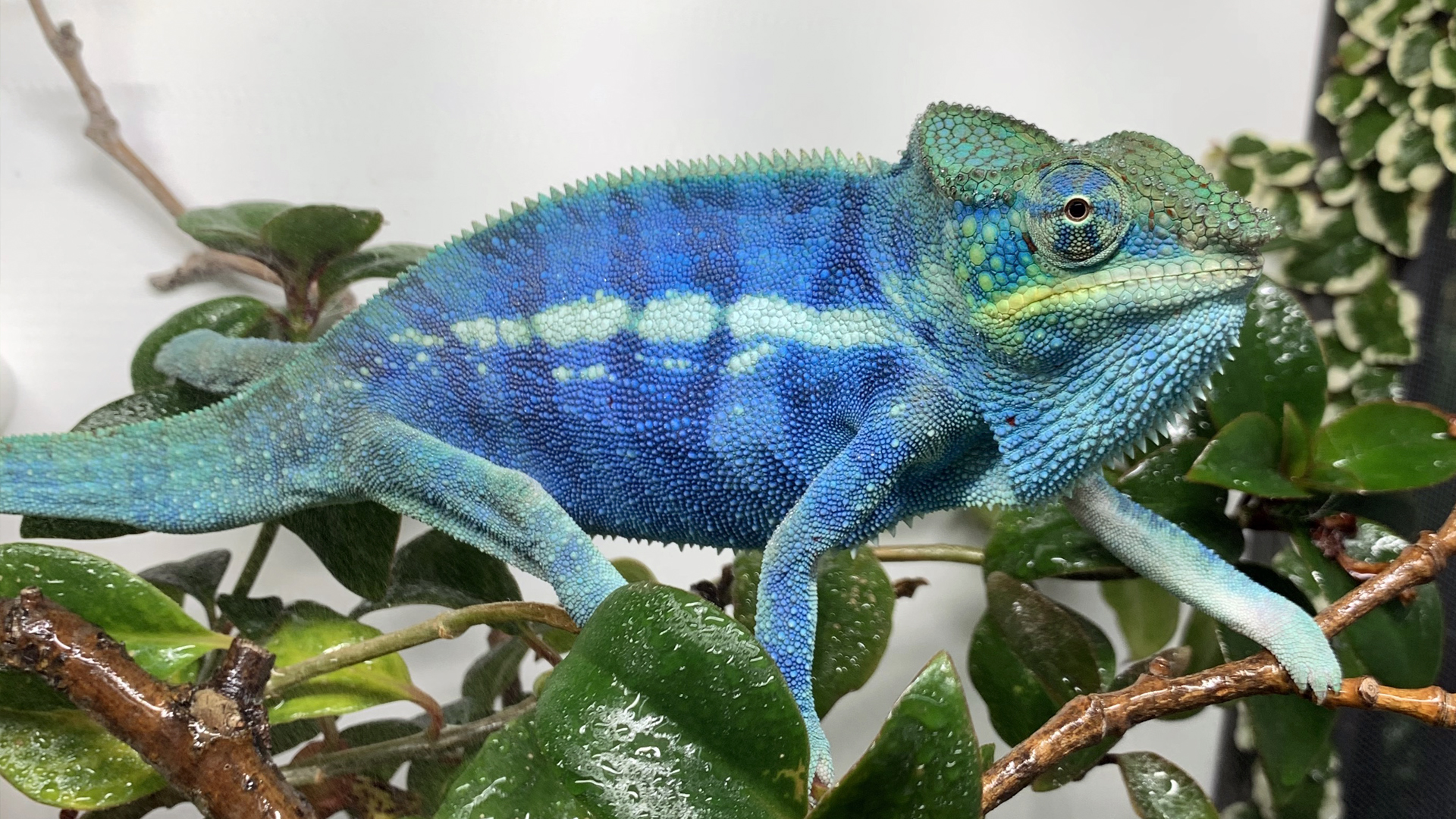
Five things to know first
What people often hope a chameleon will be, and what a chameleon actually is. Better to hear it now than after one comes home.
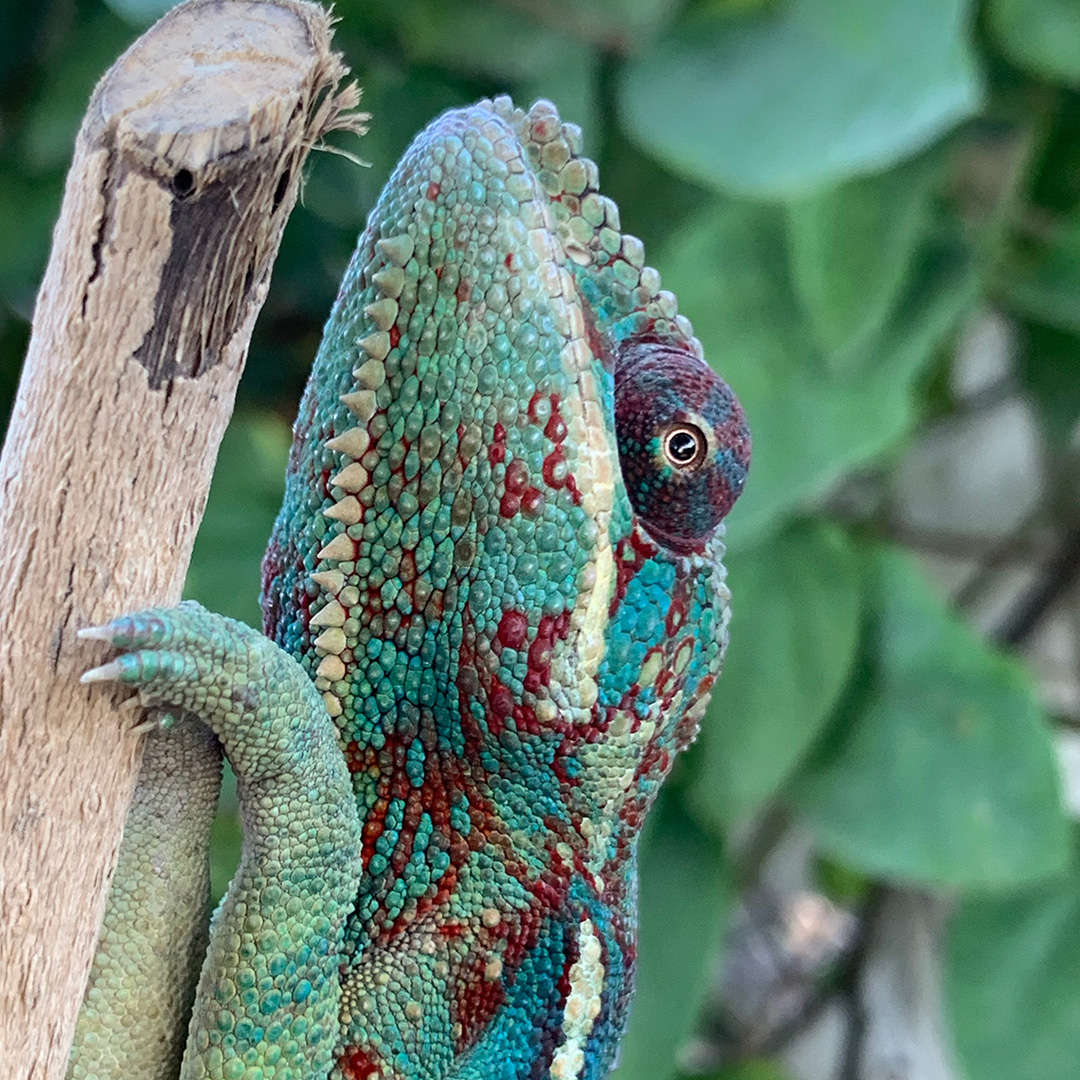
A living piece of the forest
Chameleons are endlessly fascinating to watch, and they are made for a beautiful, planted, naturalistic enclosure. Keepers find their reward in creating that environment and watching a chameleon thrive in it, being a chameleon rather than a tame toy.
And a chameleon opens a door to the whole natural world: weather, plants, insects, nutrition and Madagascar itself.
“You can create your own mini Jurassic Park where a reptilian dragon slinks in and out of the leaves.”
Females are some of the most underrated pets
The males’ kaleidoscope of color is what draws most people in, and those brightest colors are display colors, used to warn off rivals or impress a female. Resting colors are calmer.
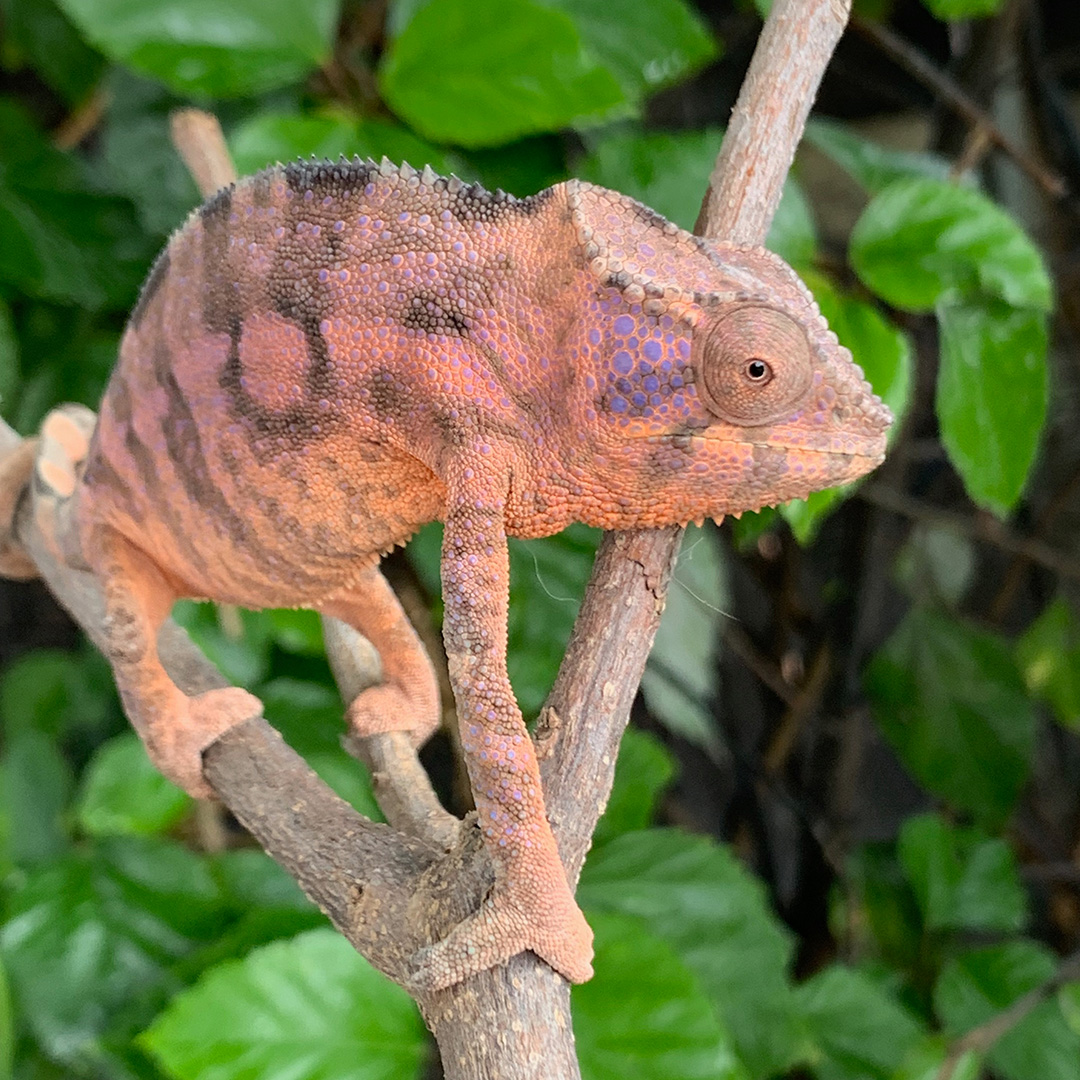
Females are only “drab” next to a male. They can be orange, pink, salmon, gray, brown or black with orange stripes, often with blue highlights on the cheeks. You don’t need a pair for a happy chameleon, and a female that isn’t bred can live as long as a male.
Is a chameleon right for your child?
Children love chameleons. A chameleon can be a great family pet under two conditions.
- Your child is happy with a pet they rarely hold.A chameleon can be held briefly, but it can’t be a big part of its life.
- You take full responsibility for its care.You make sure the setup is right and the daily care gets done. Your child helps.
- You want a pet to teach responsibility.Only works if you’re teaching by example, day after day, for years.
- Your child wants a pet that does things.Chameleons don’t move much unless they’re unhappy. It’s easy to get bored.
If the answer is yes: which panther to get
There are a lot of choices. These three guidelines keep it simple.
A well-started juvenile
Buy a young panther from an established, reputable breeder who is happy to talk with you and guide you through the first months.
Any locale, either sex
Every locale gets the same care, so choose the colors you love. Males are most in demand, but females make excellent pets.
Never wild caught
Wild-caught adults are big and bright, but they come with parasites and a hard acclimation. Bill would rather pay twice as much for a well-started juvenile.
Keep learning every day, free.
Every Panther Chameleon Podcast episode, a new chameleon show every day, and step-by-step guides for cages, lighting and care. Free on iPhone and Android, with no account needed.
Common questions
How long do panther chameleons live?
Typically five to seven years. Females often live shorter lives because of the stress of producing eggs, but a female that isn’t bred can live as long as a male.
Do panther chameleons bite?
They can, and an adult can break the skin. But they give unmistakable warnings first: puffing up, gaping, showing their teeth and fake lunges. Most bites happen to people who ignore those signs.
Can I catch salmonella or another disease from a chameleon?
Chameleons are not a significant source of diseases that pass to people. Still, wash your hands after handling one, and don’t kiss it or put your fingers in your mouth.
Can I keep two panther chameleons together?
No. Chameleons are solitary. Cohabiting causes chronic stress that eventually leads to illness, even when they seem to get along. Each needs its own cage.
Should I get a wild-caught panther chameleon?
No. Wild-caught panthers usually carry parasites and struggle to acclimate. A captive-hatched, well-started juvenile is a completely different, far easier experience.
Further reading
- Panther chameleon care summaryThe full Chameleon Academy care guide
- How Long Do Panther Chameleons Live?Bonus article from this course
- Basics: Feeding ChameleonsWhat being a “bug keeper” involves