
What Chameleon Cage Should I Get?
How to judge size, material and the features most buyers miss, so you choose the cage that suits your room.
Get the biggest cage you can. For an adult panther chameleon, 2 x 2 x 4 feet tall (or 36 x 18 x 36 inches) is the minimum, and extra width helps more than extra height. Choose screen, hybrid or glass by the conditions in the room, not the weather outside. Before you buy, check where the water drains, how branches mount and whether the hardware rusts.
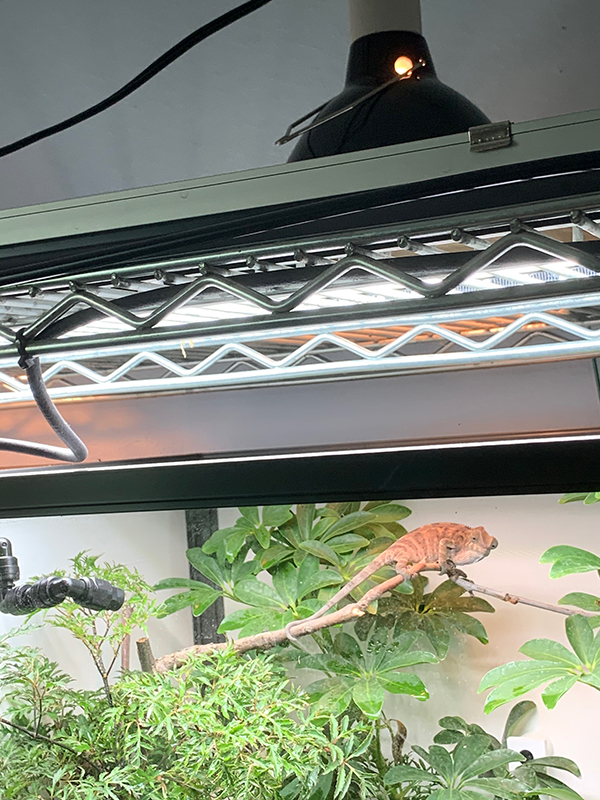
Start with the right mindset
A cage is not there just to keep a chameleon in. It is the border of the environment you build for it.
“When we have the mindset that a cage is just to contain the chameleon, our recommended cages tend to get smaller and smaller and smaller.”
Inside the cage you are building gradients of heat, UVB, humidity and security, so your chameleon can choose what it needs. That takes room. And one rule comes before any other: one chameleon per cage, no exceptions. Chameleons are solitary, and living together causes chronic stress that builds for months before anything looks wrong.
The size ladder
These are minimums that have worked for decades. If you can go bigger, do.
Hatchling
Inches, up to about three to four months old, so a new keeper can keep track of the baby. Scale the heat and UVB down to suit.
Juvenile
Feet tall. If a breeder is selling it to you, it is old enough for an adult-size cage. It will use every bit of the space.
Female
A female can live in 18 x 18 x 36 inches, but it is easy to step up to 2 x 2 x 4 feet and give her a richer environment.
Male
2 x 2 x 4 feet or 36 x 18 x 36 inches at minimum. Going from 24 to 30 inches wide makes a world of difference; 36 or 48 is better still.
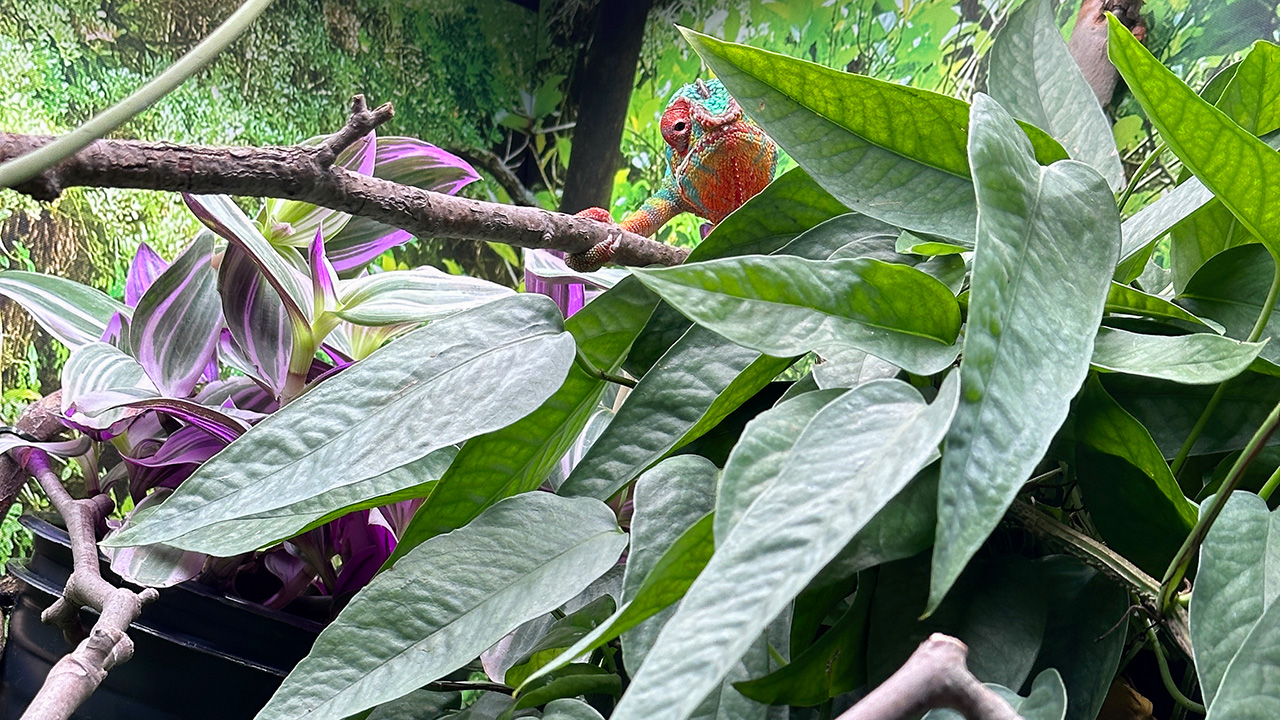
Chameleons are horizontal animals
They live in trees, but they move back and forth more than up and down. What gives them security is how far above your head they can perch, not how far the cage floor is below them.
“I would rather have a wide cage placed high up on the dresser than a tall cage placed on the floor.”
Screen, hybrid or glass? Match the room
The more solid sides a cage has, the more its inside can differ from the room around it. Check conditions in the room itself: air conditioning dries the air no matter what the weather app says.
Warm, humid room
The chameleon lives in the room’s own air. Ideal outdoors in a mild climate, too dry for most homes with central air.
Heat lamp can run all day without building up.Dry or air-conditioned room
Solid sides and back hold humidity and keep mist off your walls. A true hybrid has vents below the front door and a screen top.
Watch how much heat and humidity you add: it stays in.Dry and cold room
Insulation holds in heat as well as humidity. It needs the same bottom vents and screen top as a hybrid.
Reflections rarely bother a chameleon for long.Where “screen only” came from
In the 1980s, chameleons were kept in aquariums with no airflow, and they did badly. Screen cages were a huge improvement, and many prominent keepers lived in Southern California, where screen works well. Meanwhile, keepers in Europe used solid-sided cages for decades. Bill keeps chameleons in all three types.
Check these before you buy
Most store cages labeled for chameleons are too small. Online, look past the photos for these features.
- Where does the water go?Mist and fog drain through the cage. You want the floor to let water through into a drainage tray under the cage, keeping it away from droppings and escaped insects.
- Substrate trays sit inside.They hold wastewater, droppings and loose feeders together. Drill the tray and stand the cage in a second tray instead.
- Watertight floors.Paper towels or puppy pads still keep the moisture in the cage, where bacteria grow.
- Mount to the frame, not the screen.Screen isn’t built to carry weight and will tear. Branches and pots need anchors on the frame.
- Run a magnet over the hardware.Latches, hinges and screen that a magnet sticks to can rust, especially with daily misting.
- Vents and screen topon any hybrid or glass cage, for the chimney effect.
Bill designs the cages at his company, Dragon Strand, around these points: they stand in drainage trays, have no parts that rust, and come with his patented Dragon Ledges, which give branches and pots anchors at the level you need.

Build for fun or for size, not to save money
Building teaches you a lot about what matters in a cage, and it lets you use your space well. But a home-built 2 x 2 x 4 foot cage usually costs more than buying one, once you count tools and leftover material.
Bill’s rule: he only builds cages that are bigger than anything he can buy.
Keep learning every day, free.
Every Panther Chameleon Podcast episode, a new chameleon show every day, and step-by-step guides for cages, lighting and care. Free on iPhone and Android, with no account needed.
Common questions
What size cage does a panther chameleon need?
At least 2 x 2 x 4 feet tall, or 36 x 18 x 36 inches, for an adult. Bigger is better, and extra width helps more than extra height.
Can two chameleons share a cage?
No. Chameleons are solitary. Living together causes chronic stress that can lead to sickness and death months later, even if they look fine at first.
Do chameleons need a screen cage?
No. Screen suits warm, humid rooms. In a dry or air-conditioned home, a hybrid cage with solid sides, vents at the bottom front and a screen top usually works better.
Should a baby panther chameleon start in a small cage?
A juvenile bought from a breeder can go straight into an adult-size cage. A hatchling from your own egg does well in a 16 x 16 x 30 inch cage until three to four months old.
Further reading
- What do you need for a hatchling panther chameleon?Episode 16: the hatchling cage setup
- Plants for chameleon cagesBuilding the environment inside the cage
- Panther chameleon care guideEvery part of the setup, explained