

How to Tame a Chameleon (and What “Tame” Really Means)
Four milestones that take a nervous chameleon from hiding when you walk in to stepping onto your hand.
You can’t make a chameleon want company, but you can teach it that you are safe and that you bring food. Work through four milestones at its pace: eating while you’re in the room, taking food from your hand, stepping onto your hand for food, and eating while perched on you. Most never reach the last one, and that’s okay.

What you’ll learn
- Why food, not handling, is the key to a calmer chameleon
- The habits that make you look safe, or scary
- The four milestones, step by step, with the tricks that help
- What a realistic “tame” looks like, and when to stop
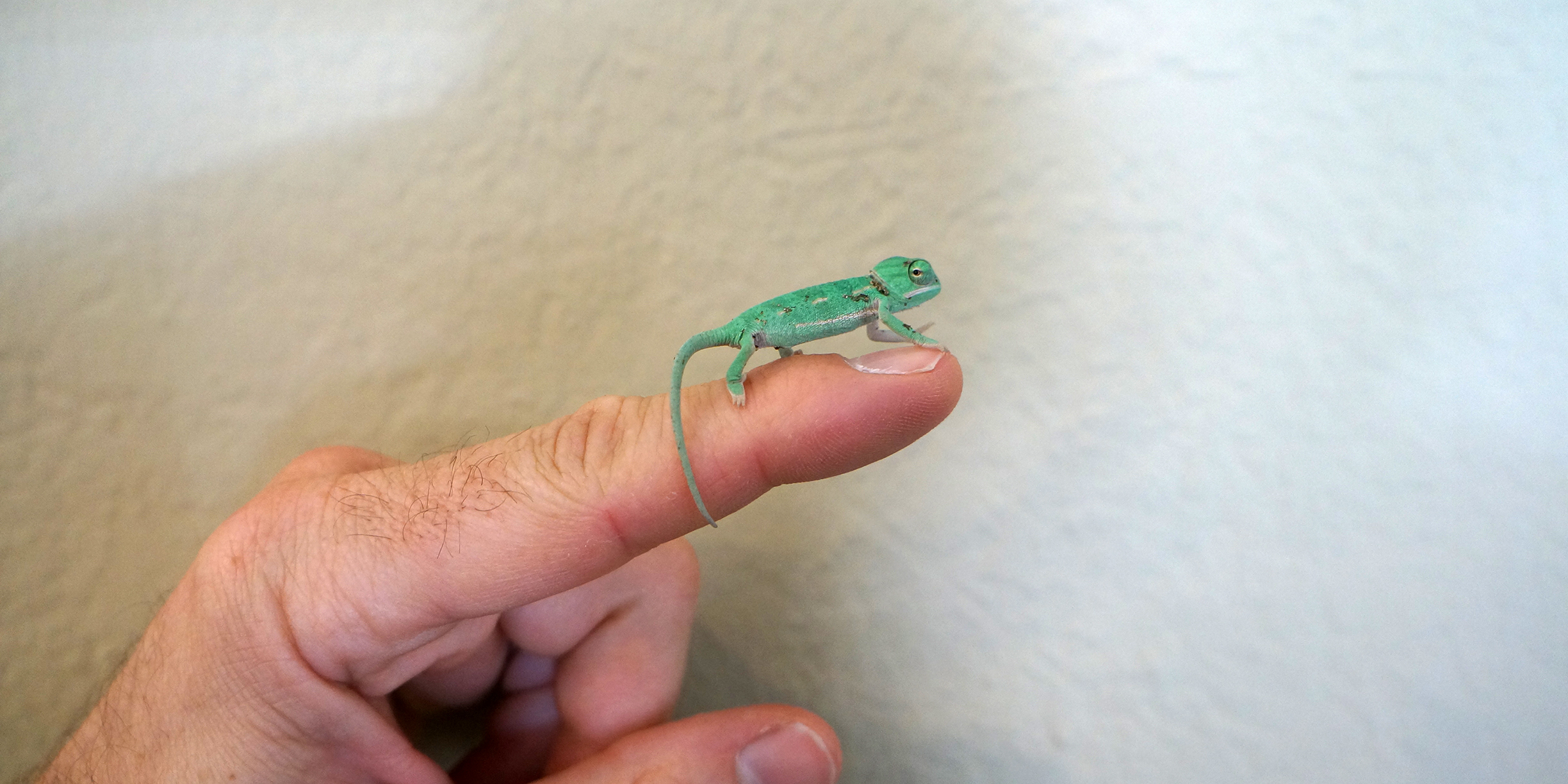
Eating near you is a sign of trust
A chameleon’s eyes are always scanning for danger. The one time they stop is when it locks onto food, which makes eating a vulnerable moment. So a chameleon that eats while you’re close is telling you it no longer sees you as a threat.
Taming works from two directions at once: show your chameleon you aren’t a danger, and become the thing that brings food. That is why every milestone below is built around a meal.
Before you start
Chameleons read your movement, your face and where you are looking. These habits make you easier to trust.
- Move slowly and predictably. No quick, jerky moves. Feeding, misting and cleaning should feel like calm, everyday routine.
- Look away often. Chameleons watch where you are looking. Spending time in the room without staring at them helps them feel hidden and safe.
- Keep your look the same. Chameleons recognize their keeper by certain markers. A hat, glasses or other change can make you look like a stranger.
- Take lively phone calls elsewhere. Big, fast hand movements near the cage are unsettling.
- Get its health right first. Health comes before any taming work, especially with a wild-caught chameleon still recovering from importation.
- Accept the chameleon you have. Some are relaxed from day one; others panic when the door opens. Most are a mix of fear and annoyance. Start from where yours is.
The four milestones
Each step asks your chameleon to give up a little more security. Move on only when the current step is routine, and expect step three to be the hardest.
It eats while you’re in the room
Spend time near the cage without being a threat, and keep feeding on a regular schedule. Spend much of that time not looking at your chameleon, then make calm eye contact when it’s time to bring food. At first it may wait until you look away before it eats. That’s fine: these are baby steps.
A captive-bred chameleon raised by people often passes this step quickly. A wild-caught one may take a while.
Done whenit eats normally while you’re in the room.
It takes food from your hand while on its branch
Start by leaving the door open while it eats from its feeder bowl: an open door feels very different from a closed one. Once that is easy, feed a little less often so it’s slightly hungry, and offer one feeder from your fingers, well within tongue range. If it stays nervous, release the feeder after a while and let it crawl up the cage side. Over time it will lose patience and take it from your fingers.
TipHold the feeder between you and your chameleon, so it doesn’t have to take its eyes off you to aim. Then look at the feeder, not at your chameleon. Bill has even closed his eyes to help a nervous one eat.
Done whenit will take almost anything you hold.
It steps onto your hand to reach food
Once your chameleon moves toward food in your fingers, hold your arm near and just under it, with the feeder placed so one step onto your hand is the only way to reach it. Let it step back off whenever it wants, so your hand never feels like a trap. When it steps all the way on, move your hand a little toward the food to show that your hand can take it somewhere good.
TipUse a special treat it gets excited about for these sessions, something that isn’t a staple, such as a hornworm, silkworm or grasshopper.
Done whenit walks onto your hand by choice.
It eats from one hand while perched on the other
This is the deepest trust: off its branch, on you, and focused on food instead of on you. A chameleon that steps onto your hand just in the hope you’ll carry it to a treat has gone as far as taming goes.
Done whenit eats calmly while sitting on you.
What “tame” really means
Most chameleons stop somewhere along the way, and that is a reasonable result for an animal built to avoid anything big enough to eat it.
A tame chameleon
- Doesn’t panic when you walk in or open the cage
- Stays calm during feeding, misting and cleaning
- Connects you with food, and may come forward when you arrive
- May walk onto your hand when it chooses to
What taming won’t do
- Make a chameleon want company or cuddles
- Turn a nervous individual into a confident one on your schedule
- Work the same way, or as far, with every chameleon
- Undo an instinct, millions of years old, to fear anything large enough to eat it
“As for me, I am happy with any level of tameness.” — Bill Strand
Mistakes to avoid
- Using hunger on an unhealthy chameleon. A healthy adult can go a week without food without suffering, so skipping a feeding or two can motivate a stubborn one. Never do this with a sick chameleon or a wild-caught one that hasn’t fully acclimated.
- Staring while it eats. If you watch the chameleon instead of the feeder, it has to keep watching you.
- Rushing a step. There is no race and no one is timing you. Go back a step if your chameleon starts hiding again.
Keep learning every day, free.
Every Chameleon Academy Podcast episode, a new chameleon show every day, and step-by-step guides for cages, lighting and care. Free on iPhone and Android, with no account needed.
Common questions
Do chameleons like being held?
Generally, no. Chameleons are not built to interact with people and would be happy having nothing to do with you. With patient, food-based taming, many become comfortable stepping onto your hand for care and short outings.
Can a chameleon bond with its owner?
Chameleons can recognize their keeper, and many learn to connect you with food and stop treating you as a threat. Whether that is a bond in the human sense is debated; the realistic goal is a chameleon that doesn’t fear you.
How long does it take to tame a chameleon?
There is no set time. Each chameleon moves at its own pace: captive-bred babies raised by people usually pass the first step quickly, while wild-caught chameleons take longer.
Why does my tame chameleon suddenly act scared of me?
Check what has changed about you. Chameleons recognize their keeper by certain markers, so a hat, new glasses or another change in your look can make you seem like a stranger.
Is it okay to hold back food to tame a chameleon?
A healthy adult chameleon can go a week without food without suffering, so skipping a feeding or two can motivate a stubborn one. Never use hunger with a sick chameleon or a wild-caught one that hasn’t fully recovered from importation.
Sources and further reading
- Basics: Handling ChameleonsChameleon Academy’s guide to when and how to handle a chameleon
- Sense of Security for ChameleonsWhy chameleons need to feel hidden and safe, and how that shapes their behavior
