

Pregnant Jackson’s Chameleon: What to Expect Before Birth
The months before a live birth, stage by stage, and the signs that babies are on the way.
Jackson’s chameleons give live birth after a pregnancy of about 6 to 9 months, and a female can store sperm long enough to give birth well after her last mating. When a big, healthy female suddenly stops eating, birth is likely within 2 to 3 days. Have fruit flies ready and remove any standing water.
The numbers to know
Averages from many Jackson’s chameleons. Your female is an individual and may not follow them exactly.
Pregnant, gravid, gestation
Keepers use these words loosely, and that’s fine. Here is what they mean on this page.
Pregnant
Carrying babies that will be born live, as Jackson’s chameleons do.
Gravid
Carrying eggs. Many keepers use it for egg-laying and live-bearing females alike; neither word is a scientific rule.
Gestation
The time from fertilization to birth. A live-bearing female is really laying eggs that never harden and are incubated inside her.
Stage by stage
From mating to the next pregnancy. The timing is an average, and the order is what to watch for.
- Mating, or long before
Fertilization can come from stored sperm
Females store sperm. Bill has seen females give birth after going what may be a couple of years without a mating, so a female can be pregnant even if she has never met a male in your care.
- The early months
Weight gathers toward the tail end
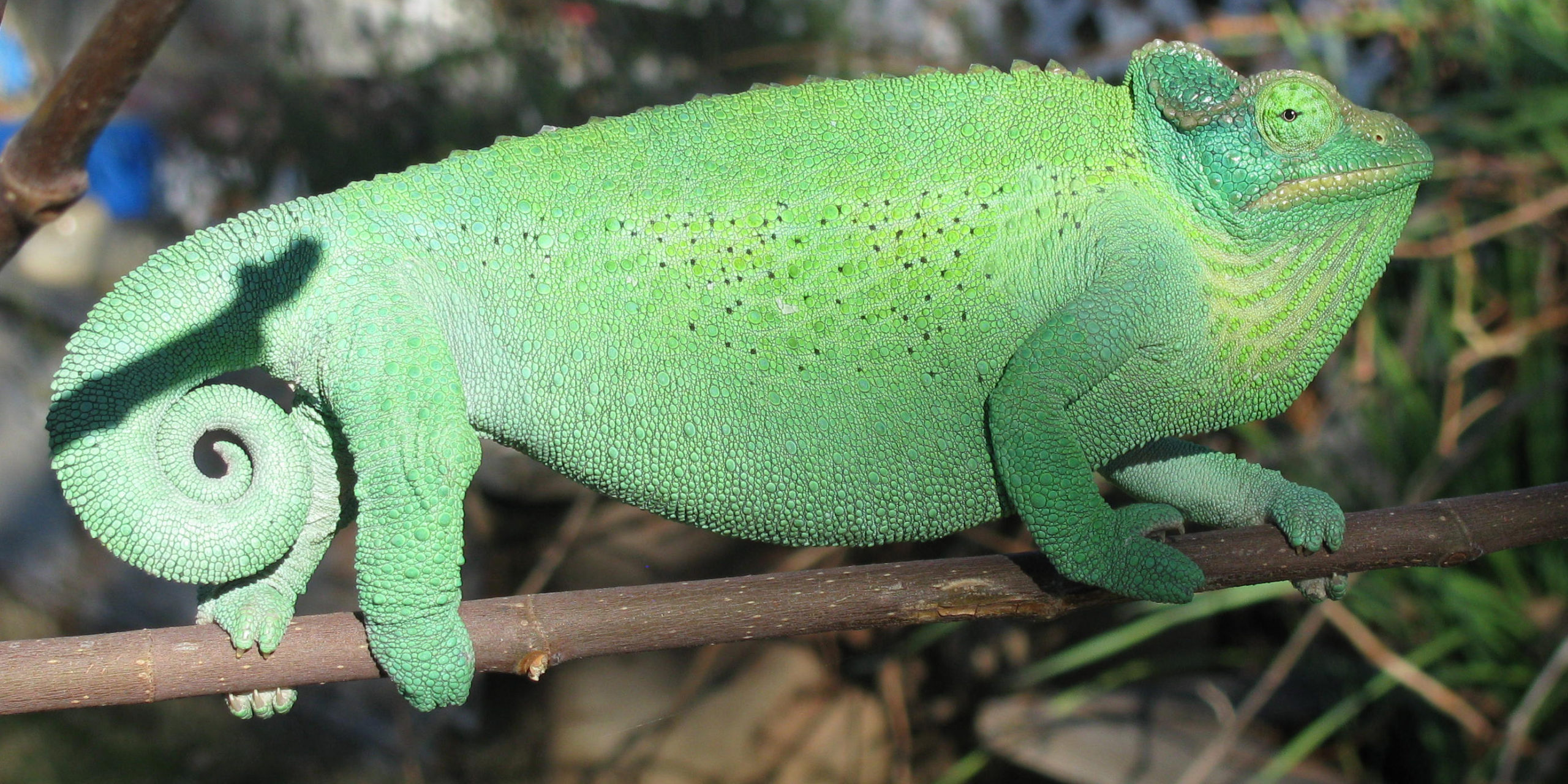
Jackson’s females are naturally round, so early on it takes a trained eye. Look for weight building up toward the back of the body rather than the middle.
- The middle months
A wider belly and a big appetite
Her belly grows out to the sides, she may bask her belly, and she eats eagerly. Feed her all the well-fed, gut-loaded feeders she wants: once her body has set the number of babies, the food goes to them. Start fruit fly cultures now, because they take time to produce.
- A few days before
She suddenly stops eating
If her eyes and other signs are bright and healthy, this usually means birth within 2 to 3 days. Not eating can also mean illness, so check her over. Then get the cage ready.
- Birth day, usually early morning
She drops the babies over a couple of hours
She grows restless, then drops babies one at a time in different spots, resting in between. Each baby arrives in a membrane sac and breaks out. The babies scatter first, then settle into the leaves to hide.
- Within a day
Move the babies out
Remove the babies from her cage within a day or so, at moments that don’t disturb her, and ideally set each one up in its own enclosure. Let them eat as much as they want.
- The first week after
Let her rest and refuel
Give her food and water and leave her be. Feed her as much as she will eat for about a week, then taper back as her appetite settles. Jackson’s chameleons are prone to gout, edema and weight gain, so don’t keep feeding everything she asks for.
- As soon as six months later
She may be pregnant again
Once she has mated, her body can keep going on its own. Bill has had females give birth again about six months later. It becomes a normal part of keeping a female who has ever been with a male.
Get the cage ready
Newborn babies are clumsy, have big heads, and must break out of a sac. Remove every extra risk before birth day.
- Add plenty of branches. She will climb restlessly while giving birth.
- Clear and dry the floor. Keep it clean, with nothing that can collect water.
- Remove all open water. No cups, bottles or fountains, and no puddles. Babies can drown.
- Have fruit flies producing. A cup bought on birth day may take a week or two to produce. Start cultures well ahead.
- Set up the baby enclosures. Ideally one per baby.
- Check her health if she stops eating. Make sure she is alert and her eyes are open and active before you assume it means birth.
Will she eat her babies?
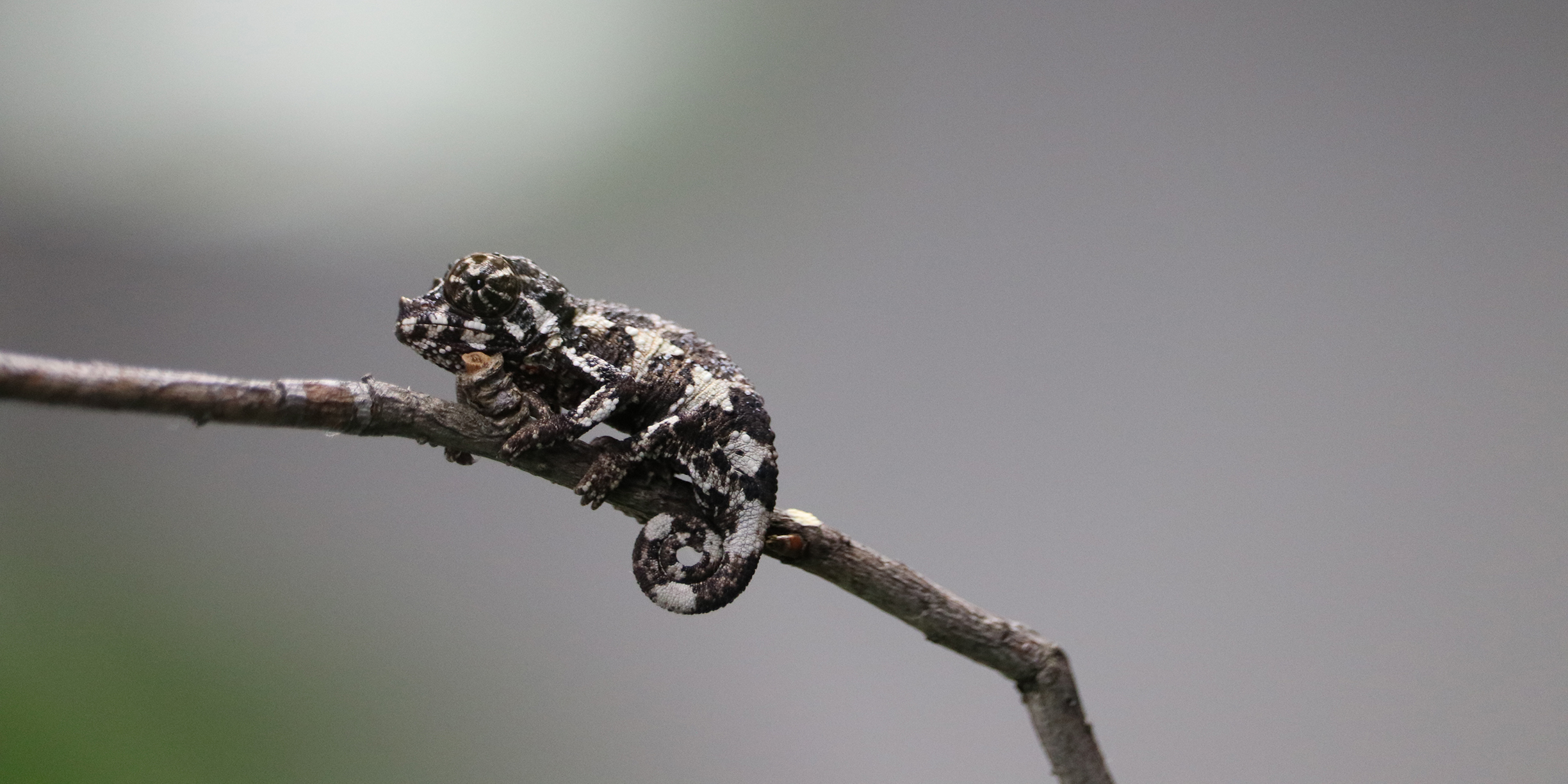
Bill has never seen a mother Jackson’s eat her babies, and neither have the breeders he knows. Still, no one knows what stops her from seeing them as food, so move the babies out within a day or so.
You may also see large yellow blobs among the babies. These are unfertilized ova, and they are completely normal. Some babies may be too weak to break out of their sac. Whether to help them is your choice: Bill chooses not to, letting birth be a test of strength for future breeders, and doesn’t judge keepers who choose differently. He does study any weak or stillborn babies for patterns that point to something he can improve in the mother’s care.
“I like things that are my fault because that means I can change the outcome next time.” — Bill Strand
Other live-bearing chameleons
Jackson’s chameleons aren’t the only chameleons that give live birth. Trioceros ellioti and Trioceros hoehnelii, both available in the hobby, are live-bearers too, and the same signs and preparations apply.
Keep learning every day, free.
Every Chameleon Academy Podcast episode, a new chameleon show every day, and step-by-step guides for cages, lighting and care. Free on iPhone and Android, with no account needed.
Common questions
Do chameleons lay eggs or give birth?
Most chameleons lay eggs, but some give live birth, including Jackson’s chameleons, Trioceros ellioti and Trioceros hoehnelii. A live-bearing female keeps her eggs inside her until the babies are ready to be born.
How long are Jackson’s chameleons pregnant?
About 6 to 9 months on average. A female can start a pregnancy when conditions seem right to her, and can delay the birth if conditions get worse near the end.
Can my Jackson’s chameleon be pregnant if I’ve never had a male?
Yes, if she was mated before you got her. Females store sperm and can use it long after a mating, possibly a couple of years later, so babies can arrive as a surprise.
How many babies does a Jackson’s chameleon have?
A first brood is often 8 to 12 babies. Larger, older females have more; one fully grown yellow-crested Jackson’s female had 52.
What are the yellow blobs after a Jackson’s chameleon gives birth?
They are unfertilized ova: eggs that went through the process without being fertilized. They are normal and nothing to worry about.
Sources and further reading
- Trioceros jacksonii: Breeding Jackson’s ChameleonsChameleon Academy’s guide to breeding Jackson’s chameleons
- Jackson’s Chameleon CareChameleon Academy’s care guide for Jackson’s chameleons
- What to Feed Hatchling ChameleonsFeeding the babies once they arrive
