Panther Chameleon Locales: Which One Should You Choose?
Ambilobe, Nosy Be, Ambanja and Sambava explained, plus what the word “locale” actually means.
Choose by color. Every locale gets the same care, so the only real question is which colors you love. For your first panther, stick to the four established locales, and skip mixed-locale animals if you might ever breed.
Every color comes from a place
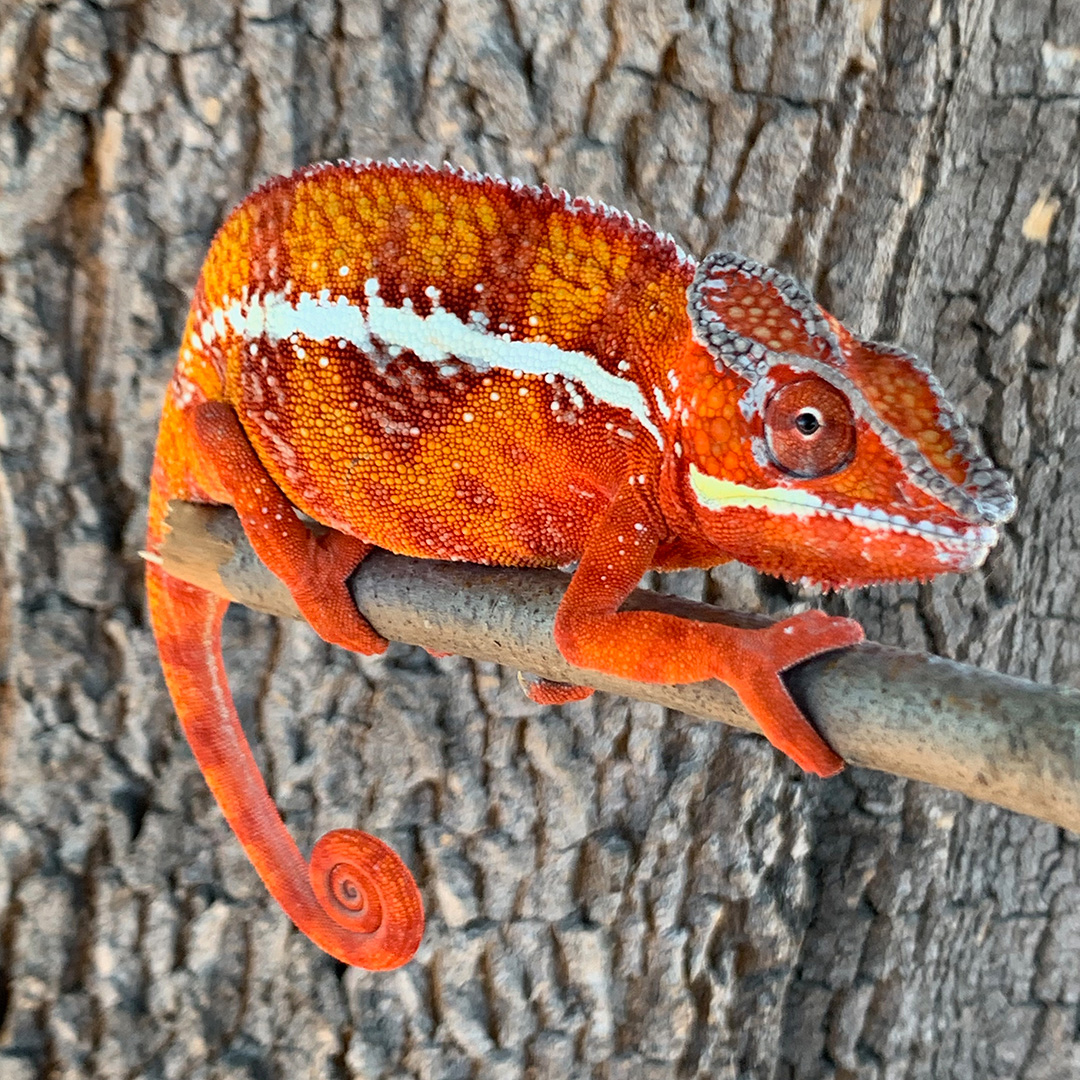
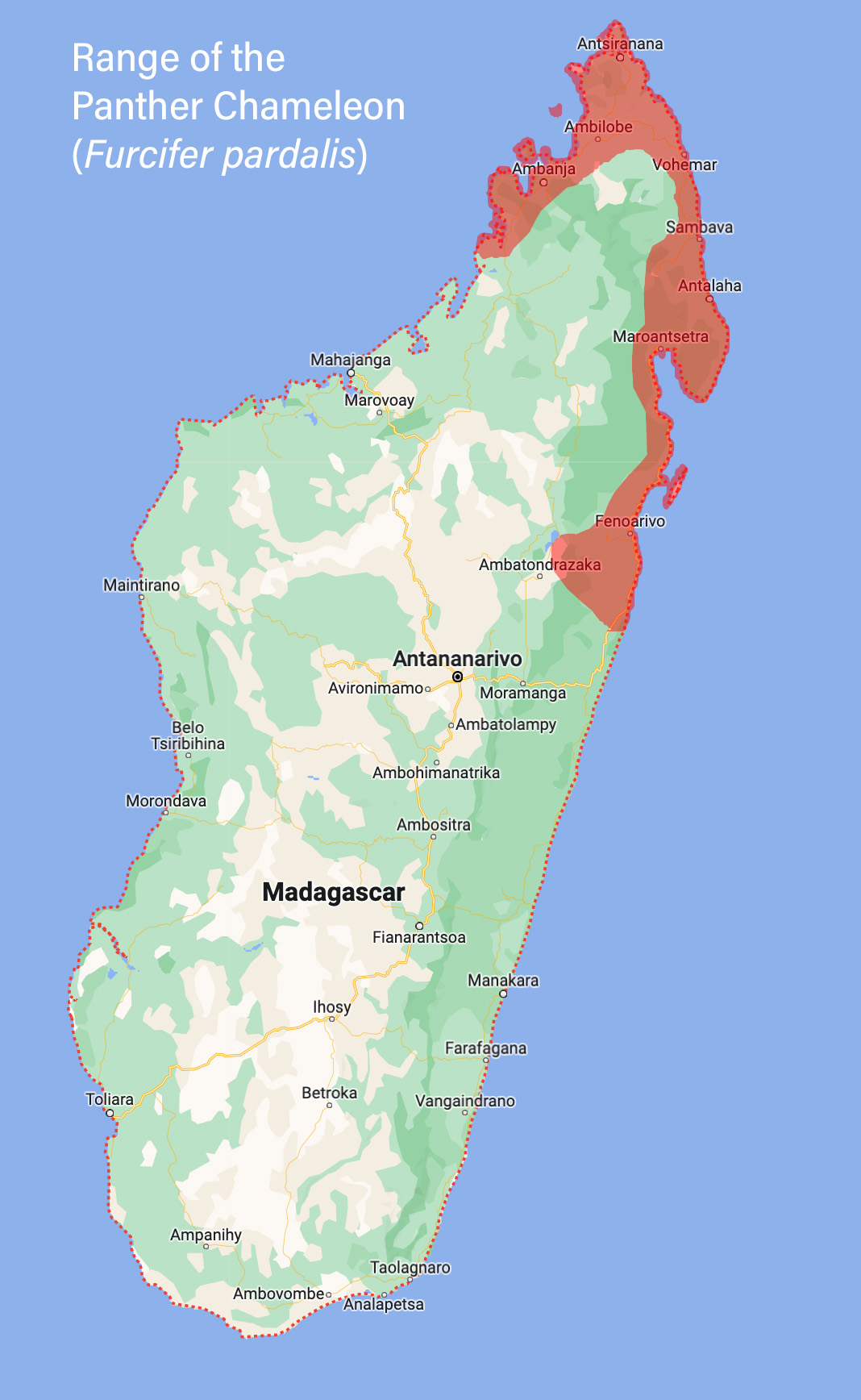
Panther chameleons live along the coasts of northern Madagascar and on the islands just offshore. Each population has its own color palette, and we name them after the nearest town, or the island itself. Nosy is the Malagasy word for island, so Nosy Be is “Be island.”
The colors are carried by the males. Females from every locale share the same pinks, salmons, browns and grays, so you can’t tell a female’s locale just by looking at her. Her origin comes down to the breeder’s records.
Four words people mix up
Panther colors are often called morphs. They aren’t. Here is what each term means.
Locale
A color variation named for where it comes from: the nearest town, or the island.
e.g. Ambilobe, Nosy BeSpecies
A population distinct enough that scientists separate it. All panthers are one species, and every locale can interbreed.
Furcifer pardalisMorph
Different colors that can appear in the same clutch, like a litter of Shiba Inu puppies in red, black and tan, and white.
Black panther catsPhysical description
Naming a variation by a visible trait rather than a place. Common with Parson’s chameleons.
“Yellow-lipped”, “Orange-eyed”The main four locales
These are the established captive lines, refined over years of selective breeding. For a first panther, you will find the best of what panthers offer right here.
Ambilobe
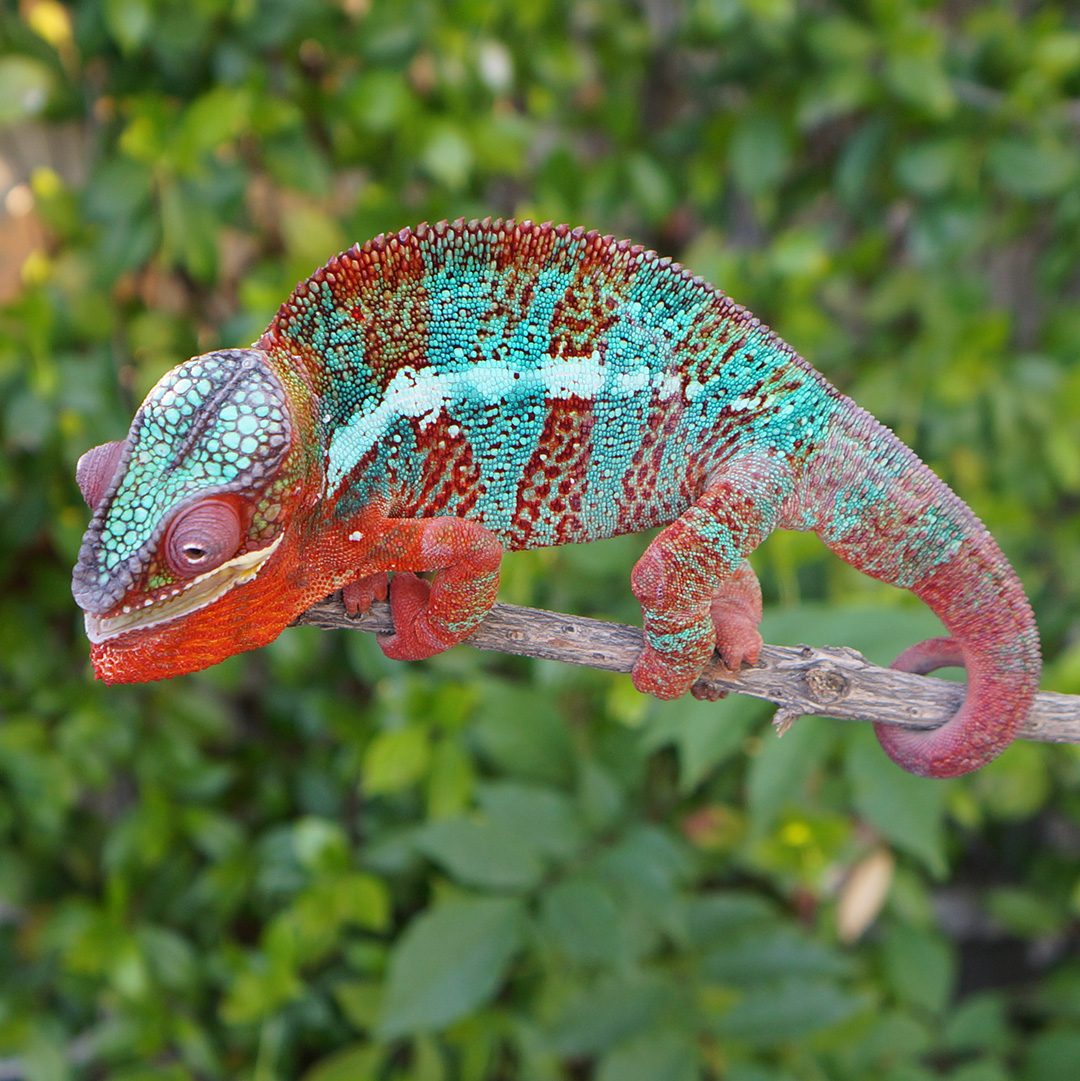
The widest range of colors in one locale, in body-and-bar combinations like red body with blue bars. By far the most popular.
Good to knowCame into the trade relatively late, in the early 2000s.

Ambanja
A bluish-green body with bluish-purple saddles along the flanks.
Good to knowBred in captivity since the 1990s, so many lines now look different from the “standard” Ambanja.

Nosy Be
Seafoam green to blue, often with red around the eyes. The famous all-blue panther came from a rare Nosy Be form with no yellow pigment.
Good to know“Nosy Be Blue” lines are captive-refined from that form. Ask the right breeders.
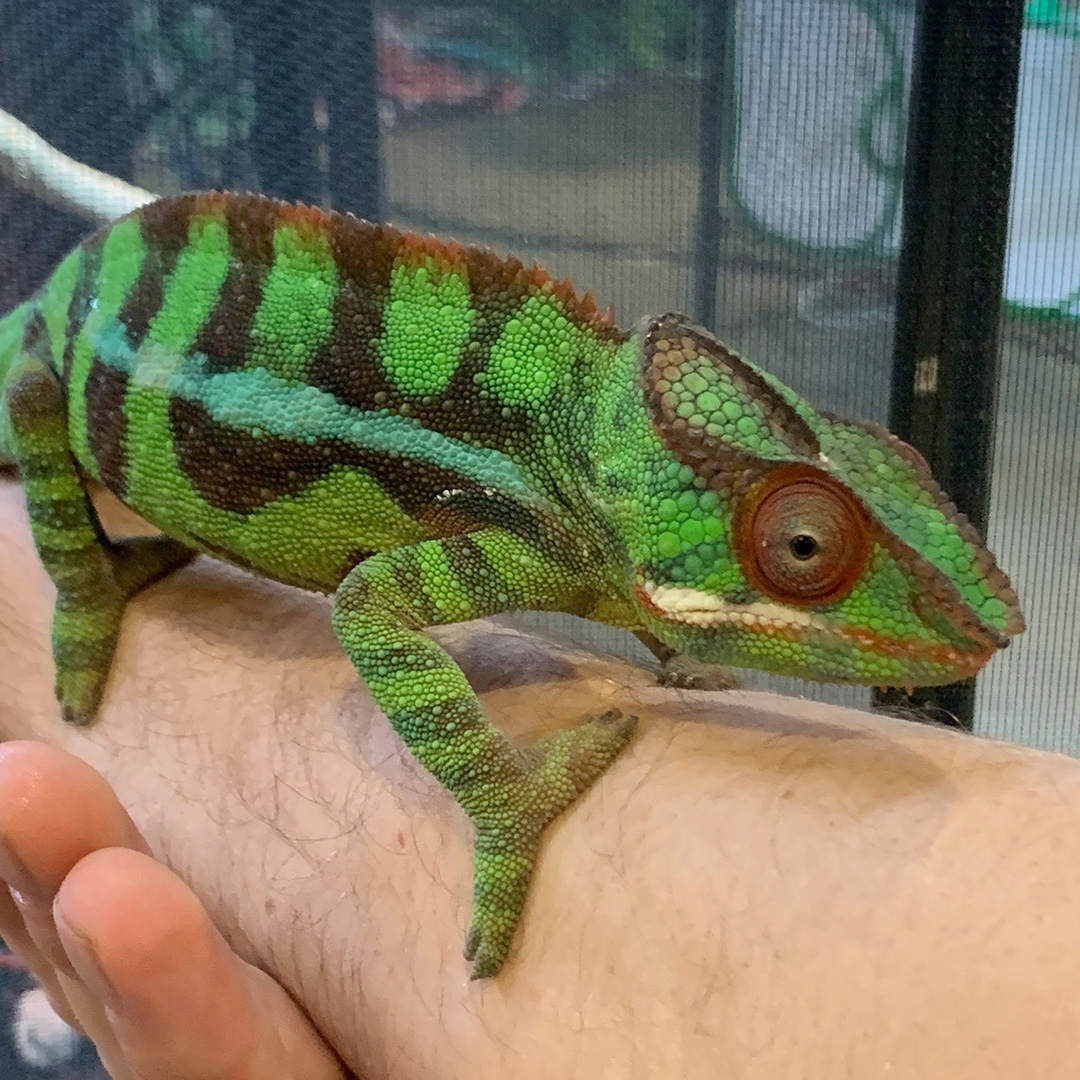
Sambava
Yellows and reds. Green at rest, turning bright yellow when excited.
Good to knowLong part of captive breeding and reliably available. Captive Sambavas tend to run large.
Before you decide
Your situation, and what it means for your choice.
Keep learning every day, free.
Every Panther Chameleon Podcast episode, a new chameleon show every day, and step-by-step guides for cages, lighting and care. Free on iPhone and Android, with no account needed.
Common questions
Are panther chameleon locales different species?
No. Panther chameleons across their whole range are one species, Furcifer pardalis, and all locales can interbreed. Attempts to split them into species or subspecies have not succeeded so far.
Do different locales need different care?
No. Even though panthers live from sea level to around 1,000 meters, care appears to be the same for every locale. Choose on color alone.
What is the most popular panther chameleon locale?
Ambilobe, because a single locale offers so many color combinations.
What does “Nosy” mean in locale names?
It is the Malagasy word for island. Nosy Be, Nosy Faly and Nosy Mitsio are all island populations.
Sources and further reading
- IUCN Red List: Furcifer pardalisRange data used for the map
- Petr Necas: Panther chameleons photographed in FloridaImage gallery of the Florida population
- Chameleon Academy Podcast: interviews with taxonomist Dr. Mark ScherzOn how species and subspecies are defined
- Panther chameleon care summaryThe full Chameleon Academy care guide