What Do Panther Chameleon Colors Mean?
How to read your chameleon’s color language, and when a color change means trouble.
Chameleons don’t change color to match their background. Panthers change with mood and temperature. Calm, muted colors mean a relaxed, content chameleon. Bright colors are for display. Dark in the morning means warming up. Pale with the mouth open means overheating, and that is an emergency.
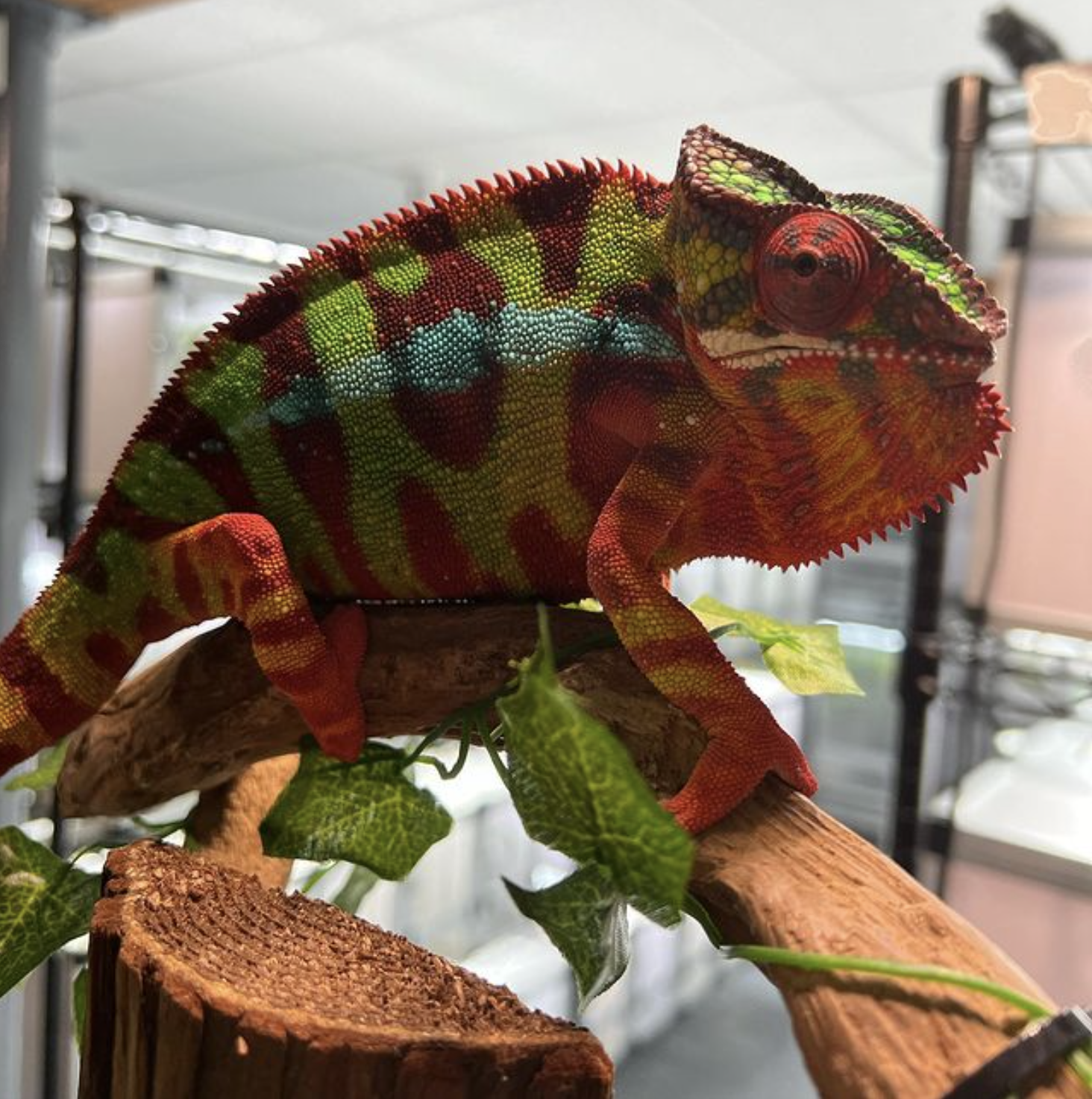
Those photos show an adult male, fired up
The panthers in breeder photos are a specific case, and every word matters. Knowing this keeps you from being disappointed by a perfectly healthy chameleon.
Babies start brown
Hatchlings of both sexes are little brown-and-white slivers built to hide. Male colors begin to show at three to six months and are complete by nine to 12 months.
Females are different
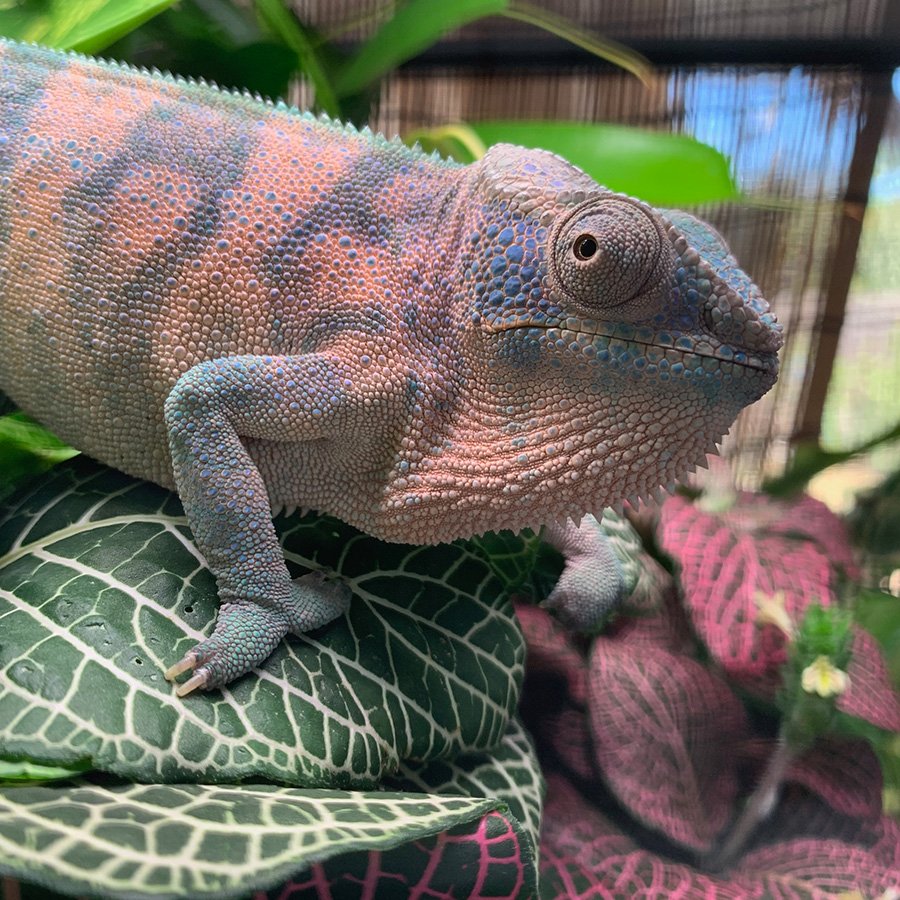
The famous colors belong to males. Females are pink, orange and salmon with blue highlights and dramatic black stripes. Young females can even grow blue cheeks, so sexing juveniles is hard: trust a reputable breeder.
Display colors
The brightest colors appear when a male faces a rival, wants to impress a female, or feels threatened. That is when the photo is taken. At home, a relaxed panther is calmer.
The color decoder
What your panther’s colors are telling you, and what to do about it.
Muted, calm colors
Relaxed and content. This is what you want to see most of the time. A dull panther is usually a happy one, not a sick one.
Bright, intense colors
Display. A rival male (or a mirror), a threat, or a female to impress. Now and then is fine. Constant flashing means something is stressing it.
Dark in the morning
Warming up. Dark colors absorb heat under the basking light. Normal and healthy, every day.
Pale, with the mouth open
Overheating: a code red emergency. Move your chameleon somewhere cooler right away.
Bright while asleep
True rest. Look in after lights-out and a sleeping panther can be surprisingly colorful. The colors fade under a flashlight.
Female: orange and black
Not interested. A female who stays in her soft pinks and oranges near a male is receptive. Bright orange with black stripes means no.
And the mystery: males that go gray
Some males turn gray and stay that way for weeks, months, even longer, for no known reason. Bill has an Ambilobe that stayed gray for about a year and a half with no effect on his health, and nothing (rivals, mirrors, females) brought him out of it. Sometimes color is just a little wacky.
Color shows maturity, not age
Adult colors arrive when a panther matures, and maturity depends on how fast it grows. Half a clutch raised in ideal conditions might show color at three months, while their siblings in poorer conditions might not until six.
That is also why age alone is a weak sign that a baby is ready for a new home. Weight is better: one breeder Bill knows won’t send a panther out until it reaches 12 grams.
Why a red shirt can make you a stranger
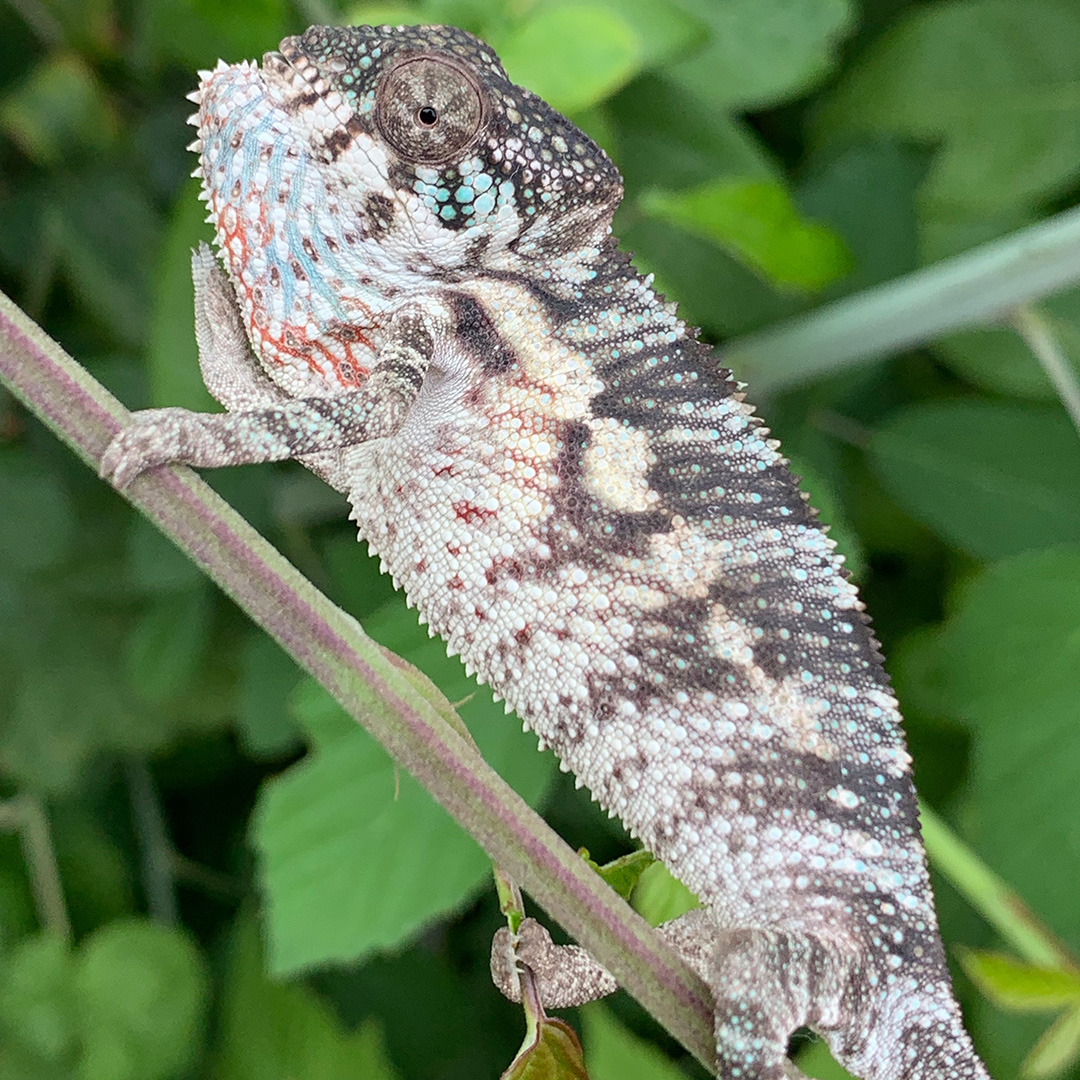
Panthers learn who their keeper is, and you may feel honored when yours stops flashing at you. But they are very visual and don’t recognize people the way we do. Walk in wearing a red shirt or a cap, and some panthers will treat you as a stranger and puff up.
You are the expert on your chameleon
Chameleons hide illness well, which is why they have a reputation for dropping dead. They don’t. Someone who watches them every day can see the small changes first, and you are that person.
When something feels off but you can’t say why, act on it. It is usually right, and chameleons respond well to treatment that starts early.
“That early disturbance in the forest is often what’s going to save their life.”
Keep learning every day, free.
Every Panther Chameleon Podcast episode, a new chameleon show every day, and step-by-step guides for cages, lighting and care. Free on iPhone and Android, with no account needed.
Common questions
Do chameleons change color to match their background?
No. That is a long-standing myth. Chameleons change color with their emotional state and temperature, within the palette of their species.
Why are my panther chameleon’s colors so dull? Is it sick?
Usually the opposite. Muted colors mean a relaxed, content panther. The bright colors in photos are display colors that come out when a male is fired up.
Why is my chameleon dark in the morning?
It is warming up. Dark colors absorb heat from the basking light. Once warm, it returns to its resting colors.
My chameleon is pale with its mouth open. What do I do?
It is overheating. Move it to a cooler area immediately. This is an emergency.
When do panther chameleons get their adult colors?
Males start showing color around three to six months and reach full color by nine to 12 months. Timing depends on how fast they grow.
Further reading
- Panther chameleon localesEpisode 5: which colors come from where
- How to find a chameleon vet before you need oneEpisode 13: acting on what you see at home
- Panther chameleon care summaryThe full Chameleon Academy care guide