
Should You Get a Wild-Caught Panther Chameleon?
The hidden costs, the benefits that don’t hold up, and what to do if you already have one.
Not as a pet. A wild-caught panther almost always carries parasites, may have hidden damage like broken bones or dehydrated kidneys, and has to learn not to fear people. Its one real advantage is that you can see its adult colors. A well-started, captive-hatched juvenile is worth the wait and the extra cost.
Where the “chameleons are fragile” myth came from
In the 1980s and 90s, every panther was wild caught. They were pulled from trees, bagged together for days, dehydrated and held with chameleons from everywhere. By the time they reached an expo they had been through the wringer, and many didn’t survive long. That is where the idea that chameleons only live six months came from.
Things have improved a great deal. Importers in the US and Europe trained exporters and refused to pay for animals that weren’t handled properly, and some wild-caught panthers now arrive looking almost captive bred. But the hidden costs below still apply.
The three hidden costs
A wild-caught panther can look healthy at a show while carrying problems you can’t see.
Disease
Wild chameleons carry parasites and infections that stress lets get out of hand. Just about every wild-caught panther has parasites. Expect fecal tests, a treatment plan with your vet, and possibly several visits.
Damage
Nature is rough. Bill has found wild chameleons in Madagascar with mouth rot, abscesses, bite scars and missing limbs. Collection adds broken feet and tails, and kidney damage from dehydration that is hard to diagnose.
Fear
A captive-hatched panther has never had a reason to fear people. A wild one has been hunted its whole life and must learn that its cage is safe. Some adjust quickly, others never fully do.
The claimed benefits, checked
Each of these sounds good at an expo. Here is how they hold up.
Already have one? Your first weeks
If you bought a wild-caught panther and found this page on the way home, here is what it needs.
- Privacy. Resist handling it or watching it eat. Leave it alone so it can learn that its new home is safe.
- A quarantine setup. Keep it away from other chameleons, wash your hands between them, and be ready to disinfect and replace plants and branches during parasite treatment. Keep leaves away from below perches, so it never drinks from leaves it has pooped on.
- A vet check. Take a fecal sample for a parasite test, and book a physical exam to catch broken bones, infections or injuries early.
- Patience. A captive-hatched panther may settle in days. A wild one can take weeks.
Worth the wait
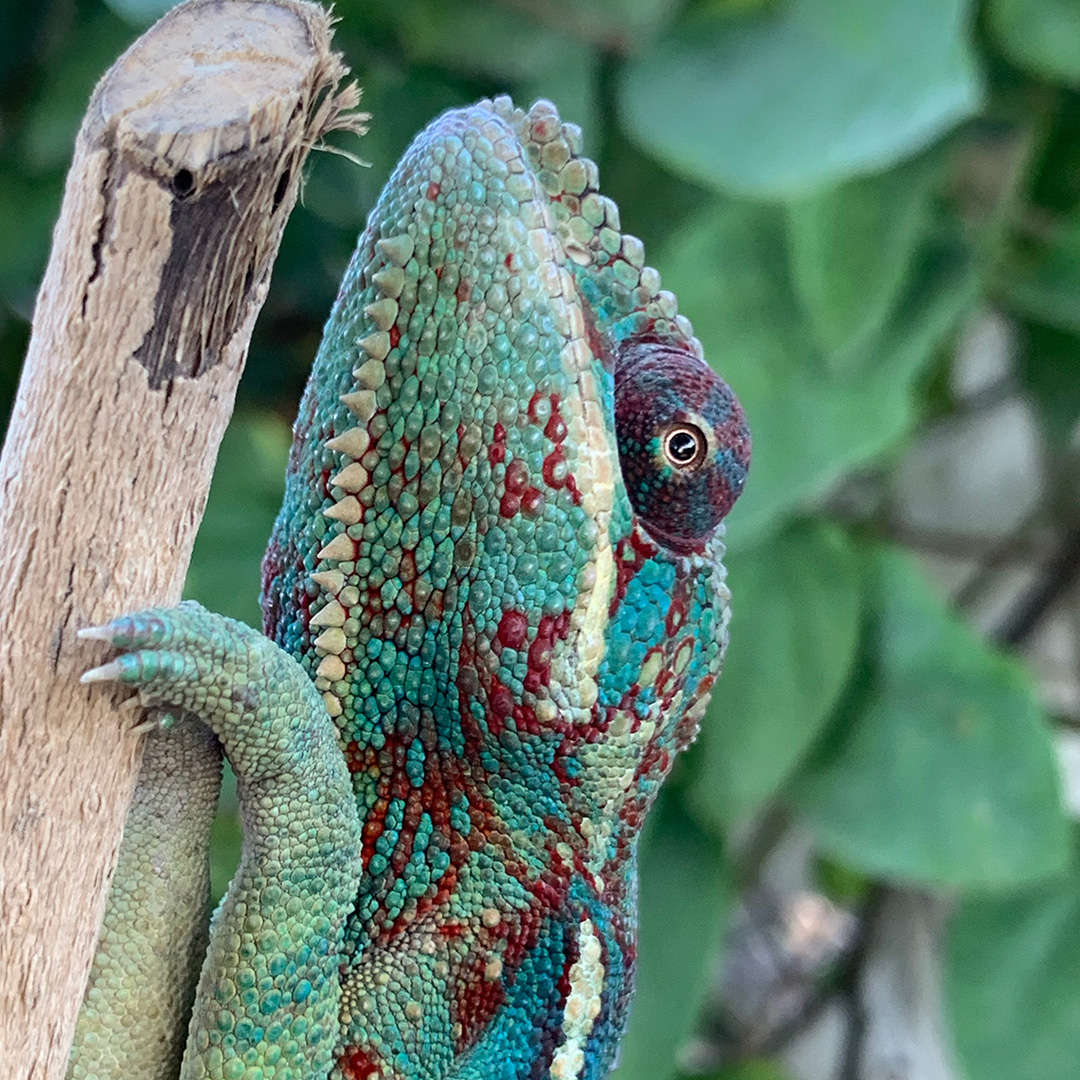
Bill has decades of experience acclimating wild-caught chameleons of every kind. Given the choice between a beautiful wild adult male that is cheaper and a well-started juvenile, he still chooses the juvenile.
New keepers today can find almost any locale, male or female, captive hatched. Take advantage of it.
“I am still going to the captive hatched, well started juvenile from a reputable breeder, even if I have to be on a wait list.”
Keep learning every day, free.
Every Panther Chameleon Podcast episode, a new chameleon show every day, and step-by-step guides for cages, lighting and care. Free on iPhone and Android, with no account needed.
Common questions
Do wild-caught panther chameleons have parasites?
Almost always. Assume a wild-caught panther has parasites, get a fecal test from your vet, and follow the treatment plan your vet gives you.
Are wild-caught panther chameleons cheaper?
Up front, sometimes, though prices are now close to captive hatched. Once you add vet visits and medicine, they usually cost more.
How long does a wild-caught chameleon take to settle in?
Weeks, compared with days for a captive-hatched juvenile. Give it privacy and don’t handle it while it adjusts.
Can I catch anything from a wild-caught chameleon?
No pathogens of high concern have been identified passing from chameleons to people. Wash your hands after handling it or cleaning its cage, and don’t kiss it.
Further reading
- Where to buy a panther chameleonEpisode 2: why a well-started juvenile is the best start
- How to find a chameleon vet before you need oneEpisode 13: you will need one for a wild-caught panther
- Panther chameleon care summaryThe full Chameleon Academy care guide