
How to Tell if a Panther Chameleon Is Healthy
The checks to run before you buy, and how to get your new panther home safely.
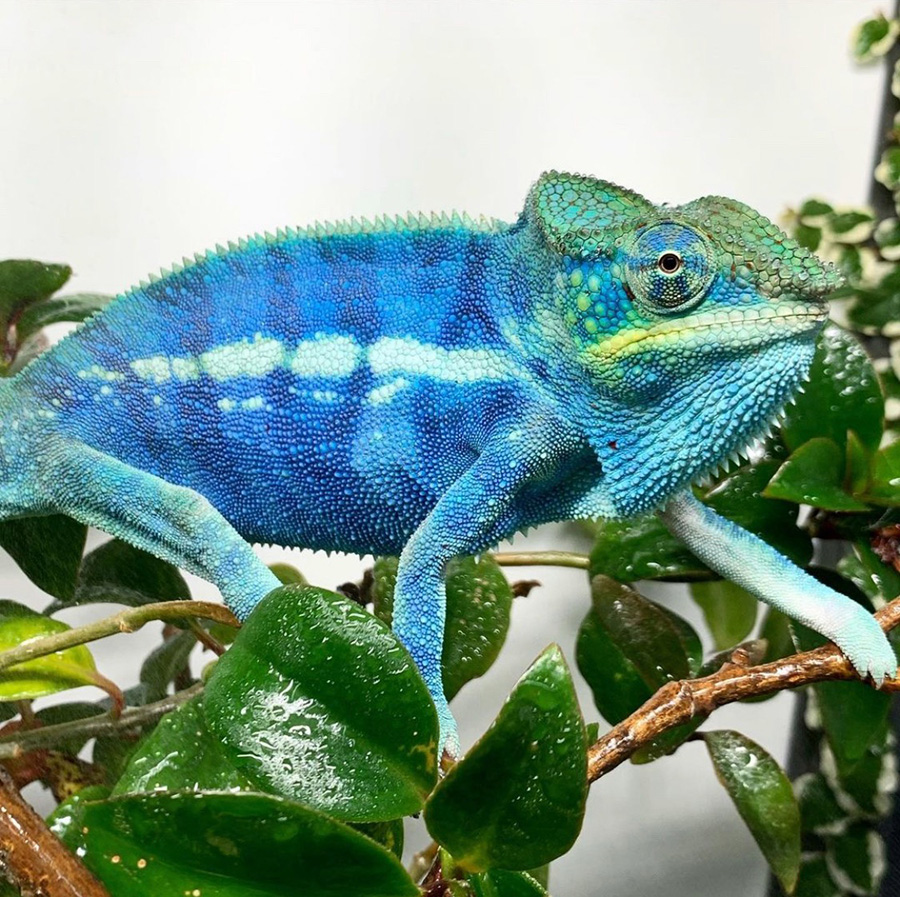
Put the chameleon on a thin stick and watch it walk: you want a firm grip and a confident gait. Then check each foot and the tail for breaks, the gums for swelling, and the skin for bite marks or burns. Once it is home, watch for eyes closed during the day, and get a fecal check.
The health check, step by step
Do this at the show before you buy, or the moment a shipped chameleon comes out of its box. Put it on a stick thin enough that its feet wrap at least halfway around.
Found a problem with a shipped chameleon? Tell the breeder by email or text, so there is a written record, not by phone.
Buying online: getting your panther home safely
Most panthers are bought from a breeder and shipped. The last miles are the riskiest part of the journey.
- Get to know the breeder first.They will choose your baby, so trust matters more than the photo of the father.
- Pick it up from the FedEx or UPS hub.The delivery truck, with 30 stops before yours, is the most dangerous leg.
- Open the box at home.Unless your breeder requires a check at the hub, let it go straight from the box into its cage.
- Never let the sun hit the box.Sun through a car window can overheat it even with the air conditioning on.
- Never leave it in the car.Take the box in with you, even for a quick stop.
- Choose a breeder who raises babies individually.It produces the healthiest chameleons.
Buying at a reptile show
Shows gather the good, the bad and the ugly in one room. Have your setup running at home before you go.
Go in with a plan
- Research the vendors before the show
- Ask the vendor to let it walk on a stick
- Look for the most spirited baby
- Shop on quality and lineage
- Walk away if the right one isn’t there
Common mistakes
- Shop on price
- Ask to hold it: hands carry pathogens from booth to booth
- Buy from a cage of chameleons crammed together
- Judge its personality in the chaos of a show
- Get swayed by bright wild-caught adults
Choose the spirited one
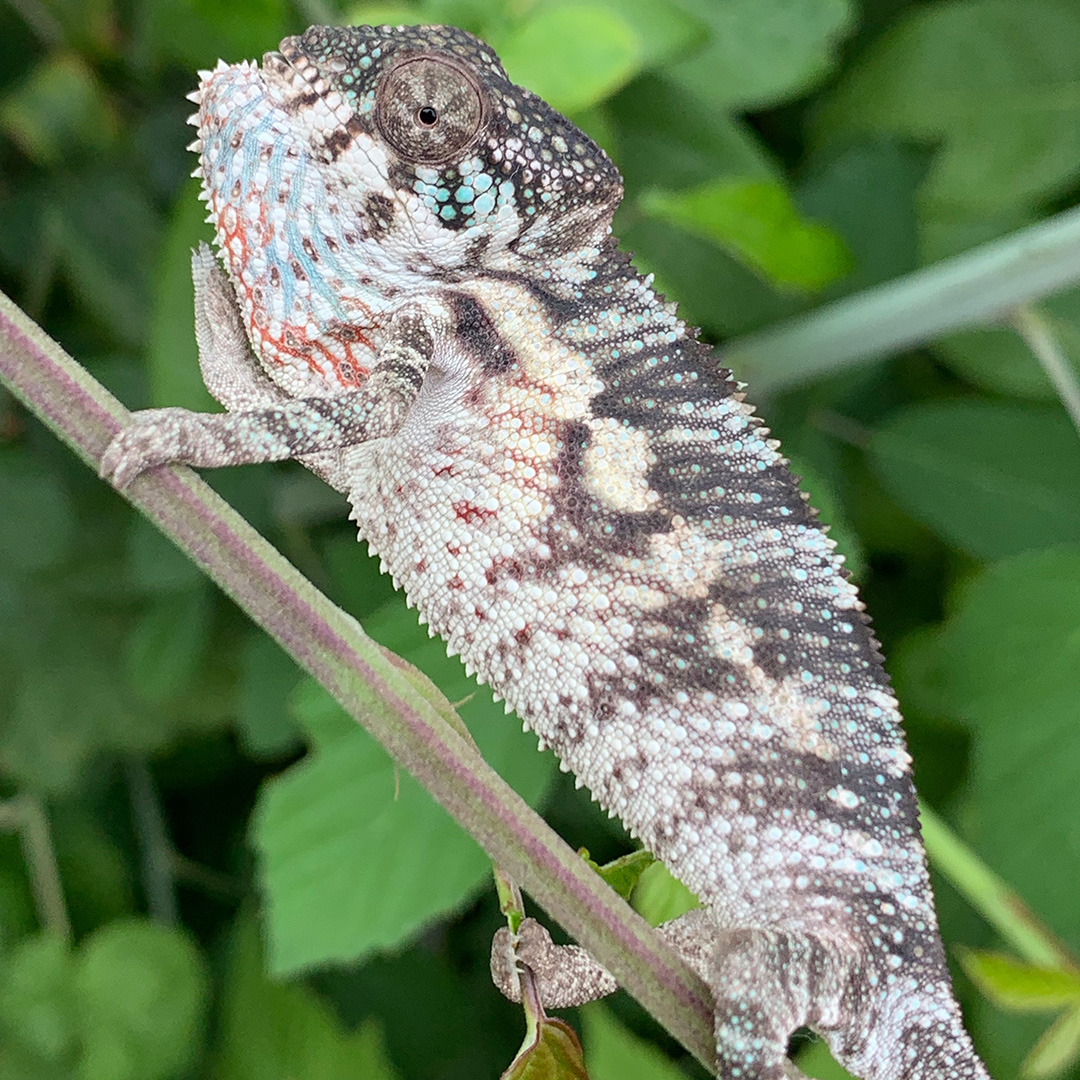
A calm, passive baby at a show may be exhausted or sick. A healthy chameleon defends itself against a big, strange human. Bill looks for the one that stands its ground.
“I personally look for the most spirited baby because I know that that is the one that is healthy enough to analyze their environment and actively take up space.”
The first days at home
Once the adrenaline wears off, a sick chameleon can no longer hide it. Keep watching.
- Give it a day or two of privacy to settle into its new cage.
- Watch for eyes closed during the day. That is a sign something is wrong and may need a vet.
- Get a fecal check to be safe. For a wild-caught chameleon, it is the first step.
- Report problems in writing. A good breeder will work with you, sometimes even sending a return label.
Keep learning every day, free.
Every Panther Chameleon Podcast episode, a new chameleon show every day, and step-by-step guides for cages, lighting and care. Free on iPhone and Android, with no account needed.
Common questions
How can I tell if a baby panther chameleon is healthy?
Watch it walk on a thin stick: it should grip firmly and walk confidently. Check its feet and tail for breaks, its gums for swelling, and its skin for bite marks or burns.
Should I have my chameleon delivered to my door?
No. Pick it up from the FedEx or UPS hub. The delivery truck, with its many stops, is the riskiest part of the journey.
Why can’t I hold a chameleon at a reptile show?
People handle reptiles all over the show, and their hands spread pathogens from booth to booth. Ask the vendor to let it walk on a stick instead.
What do gray marks on a baby chameleon mean?
Gray horseshoe shapes are usually bite marks from being raised with other babies, and they fade over a couple of sheds. Gray splotches that don’t shed away may be healed burns.
Further reading
- How to choose a panther chameleon breederEpisode 3: the breeder picks your baby, so choose well
- Is shipping a chameleon safe?Episode 11 of this course
- How to find a chameleon vet before you need oneEpisode 13 of this course