
What Do You Need for a Hatchling Panther Chameleon?
The setup Bill uses to raise one hatchling in luxury, and the shopping you should finish before the egg hatches.
A 16 x 16 x 30 inch screen cage with a gentle UVB bulb and a small basking bulb, an LED bar for daylight, a fogger and a hand mister for water, shrink-wrap window film to hold humidity, and a tray under the cage for drainage. Treat it as a real setup, not a temporary one: your hatchling lives in it for its first three to four months.
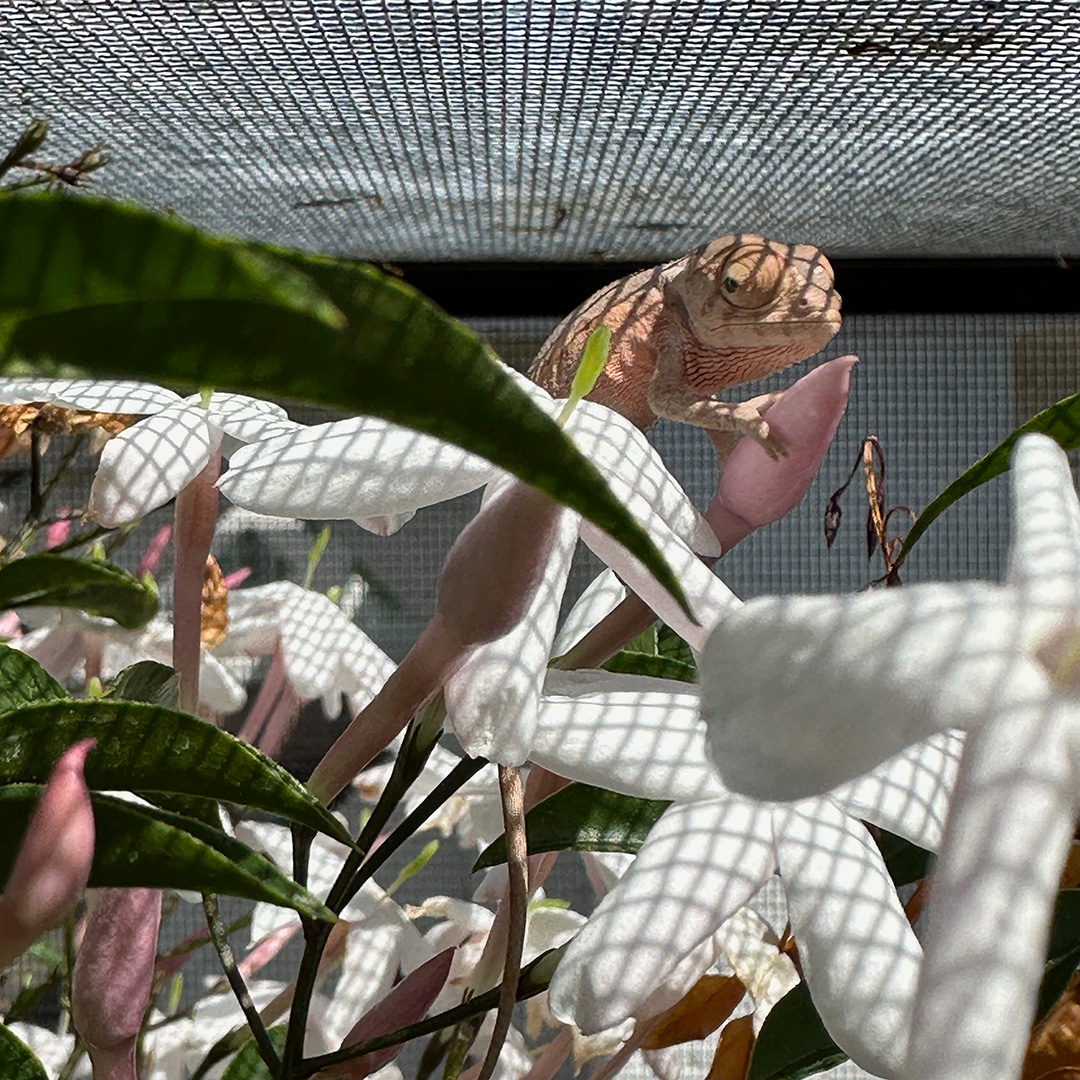
Why a hatchling setup has to be right the first time
This episode opens the hatchling series, which follows one baby from egg to adult cage.
“You have second and third chances to get it right with an older chameleon. You do not get a second chance to get it right with a hatchling.”
Three jobs while your egg incubates
The egg hatches when it wants to. Early is the problem, so don’t put these off.
- Learn the incubation process. What a healthy egg looks like, warning signs, and what happens at hatching. That is the next episode in the series.
- Set up the cage. This is where you learn chameleon husbandry, and it takes the longest, so order the equipment now.
- Prepare to feed. Your chameleon eats only live insects, and it is what it eats, so you will be caring for insects too.
- Then: grow and graduate. Later episodes cover the growing chameleon, the move to the adult cage, behavior and a medical overview.
The equipment, and why each piece is there
Chosen for affordability, availability, ease for a first-time keeper, and what carries over to the adult setup. Other combinations work too.
The cage
The Zoo Med Chameleon Kit: a 16 x 16 x 30 inch screen cage. Big enough for a planted environment, small enough that you can keep track of your baby.
UVB and heat
The kit’s dual fixture holds a 13-watt compact UVB bulb and a heat bulb, plus a temperature probe for checking the basking spot. Both bulbs get replaced in the adult cage.
Daylight
The kit has no light for vision, and chameleon cages are usually too dark. Bill adds a 22-inch Arcadia Jungle Dawn LED bar, which moves to the adult cage later.
Fogger and hand mister
No automatic misting system: chameleons hate being sprayed, and a mister goes off wherever the baby is. A fogger is gentler and can leave the plants covered in dew. A hand mister lets you aim.
Window insulation film
Tape it to the outside of the frame and tighten it with a hair dryer. You get clear walls that hold in humidity and keep mist off your walls and furniture.
A tray under the cage
Buy a substrate tray one size up (an 18 x 18 inch tray for this cage) and stand the cage inside it, so drain water collects outside the cage.
The “death kit” at the one stage it works
The Chameleon Kit has earned its bad reputation. Bill has warned the community about it for years. Here is why it fits a single hatchling.
The wrong tool
- The cage is too small past four to five months old
- The UVB bulb is so weak that only a sliver in front of it reaches a useful level
- You may think your chameleon gets UVB when it doesn’t, which leads to metabolic bone disease
- Chameleons sold in stores are usually already too big for it
The right tool
- The cage lets a baby stretch out without getting lost
- That small zone of useful UVB is big enough for a hatchling to sit in
- A baby needs to be able to get out of the UVB, and here it can
- An adult T5 bulb is too strong unless you raise it above the cage and plant densely
Don’t get into a fight
Post a photo of the Chameleon Kit and you will likely be told to change it now or your chameleon will die. The people saying it are right about the cases they usually see. Bill’s suggested reply:
“Yes, I know the dangers in using the Chameleon Kit, but I am being guided in how to use it safely and effectively as I transition to my chameleon’s adult setup.”
You are welcome to say you are working with Bill and point them to this series. Don’t expect every group admin to be convinced.

Plants for hiding, vine for basking
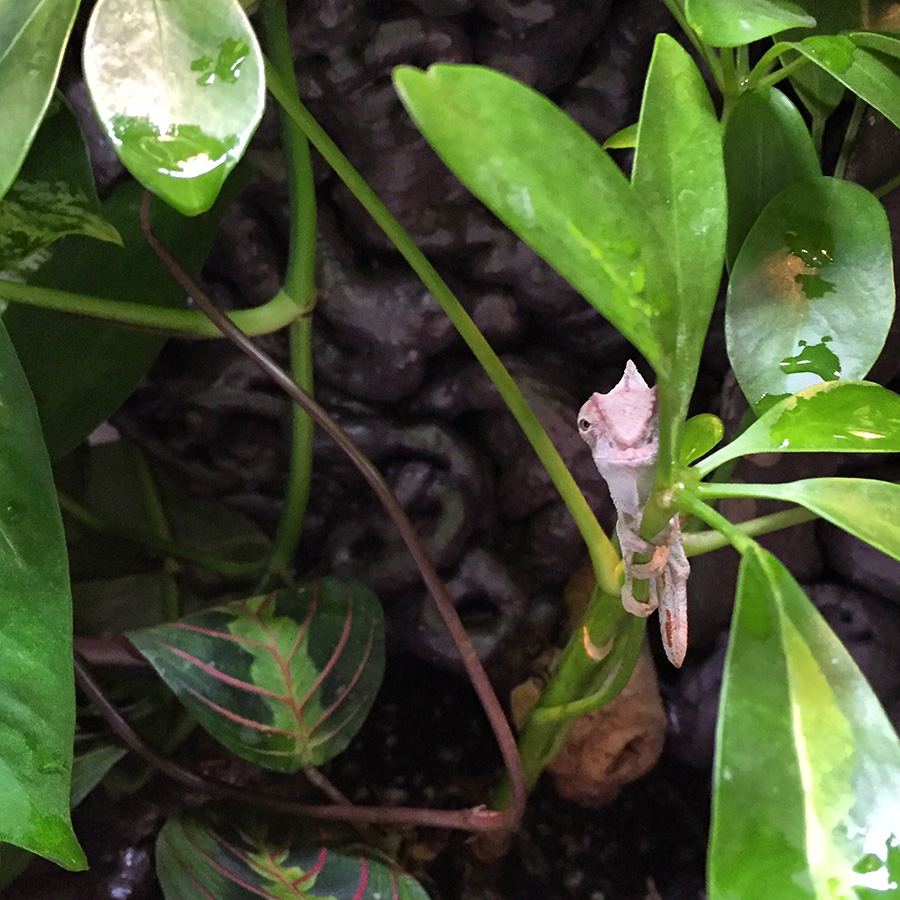
A baby knows everything wants to eat it. Give it an open spot to bask and thick foliage to hide in, starting about five inches below the top and reaching at least to the middle of the cage. Look for bushy plants about 24 to 26 inches tall.
Zip-tie the kit’s bendable vine to the screen so you can place it exactly where the UVB and heat are right.
Keep learning every day, free.
Every Panther Chameleon Podcast episode, a new chameleon show every day, and step-by-step guides for cages, lighting and care. Free on iPhone and Android, with no account needed.
Common questions
What size cage does a hatchling panther chameleon need?
A 16 x 16 x 30 inch cage works well for its first three to four months. A hatchling can live in an adult-size cage, but in a smaller one you can keep track of it more easily.
Is the Zoo Med Chameleon Kit safe?
For juveniles and adults, no: the cage is too small and the UVB bulb too weak. For a single hatchling, its small cage and gentle UVB are an advantage, as long as the basking spot is placed correctly.
Should I use an automatic mister for a baby chameleon?
Bill doesn’t. Chameleons hate being sprayed, and an automatic mister can’t avoid the baby. He uses a fogger plus a hand mister he can aim.
Is buying an egg cheaper than buying a juvenile?
Only at first. Add the equipment and food to raise it to three months old, the age you would have bought a juvenile, and the egg usually costs more.
Further reading
- Should you buy a panther chameleon egg?Episode 8: the decision before this one
- Plants for chameleon cagesWhich plants to use, and plant toxicity
- The Forest Edge 5+5 methodA simple way to lay out a chameleon cage