

How to Make a Chameleon Egg Laying Bin
Bill builds a lay bin for a picky, rare female and shares what she actually chose.
A simple container with 4 to 6 inches of a soil and sand mix that holds a hole works for most female chameleons. Give it drainage so water never pools, block light from the sides, and give her privacy. Skip deep bins she can tunnel in: females look for a firm surface about half their body length down.
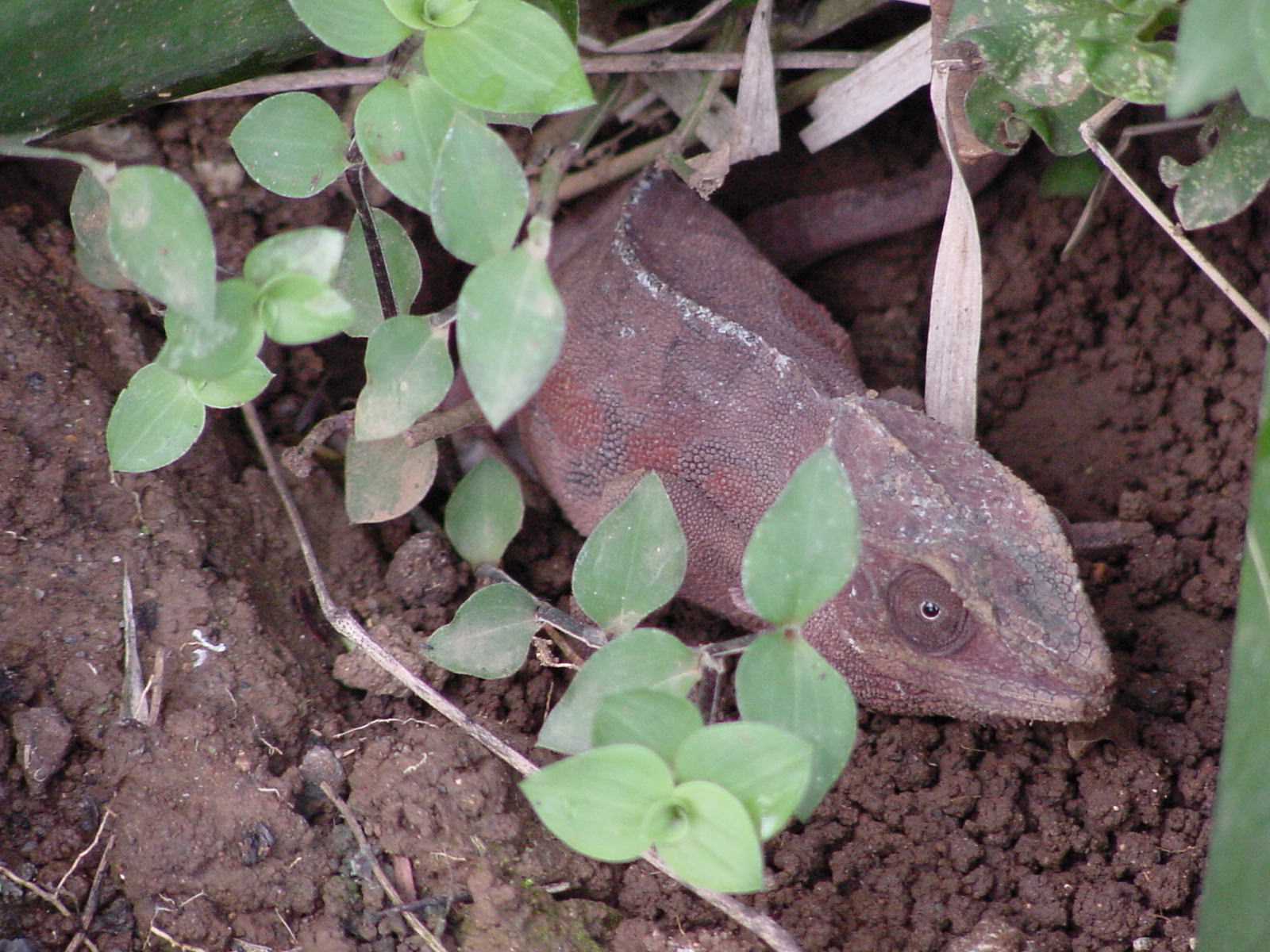
What you’ll learn
- The signs a female is about to lay
- What a female is really looking for underground
- How to build a lay bin, step by step
- Why a simple bin is enough for most females
Signs she’s ready to lay
A female veiled can make eggs without ever meeting a male, so there may be no mating date to count from. Watch her body and her behavior instead.
- She grows wider. Her girth increases over the weeks, and you may see or feel egg shapes.
- She eats everything, then stops. Feed her what she wants once eggs are developing. Near the end there is no room for food, and going off food within the week before laying is common.
- She moves low in the cage. A female who usually basks up high starts hanging around the bottom.
- She paces and climbs the walls. Restless searching is the clearest sign she is looking for a place to dig.
After a mating, veiled and panther chameleons usually lay about 30 days later. Species that can hold their eggs are harder to predict.
What you need
Everything comes from a home improvement store.
- A clear storage boxAbout 16 by 12 inches and 7 inches high. Clear sides let you see where eggs were laid.
- Black trash bags and duct tapeTo block light from the sides while she digs.
- A drillFor drainage holes in the bottom.
- Soil and play sandRoughly half and half, mixed so a hole holds its shape.
- Smooth rocks and a small rooted plantOptional, to give a picky female different things to find underground.
- Branches, a screen or a cameraA way down to the bin, and privacy while she digs.
How to build it
This is the full version Bill uses for a picky or unfamiliar species. For most veiled and panther females, steps 1 to 4 and 7 are enough.
Block the light
Duct tape a few layers of black trash bag around the sides. Digging into light would unsettle her, and once she has laid you can peel the plastic off to see whether any eggs are against the sides or bottom.
Drill drainage holes
Drill several holes in the bottom so no water pools when the misting runs. She will likely dig all the way down, and a female won’t lay in soaked soil.
Mix the soil
Mix roughly half soil and half play sand. The exact ratio doesn’t matter, as long as a hole holds its shape and doesn’t collapse on her.
Fill it to 4 to 6 inches
That depth works for most species. Bill went from 8 inches, to 6, to 4 over the years, as his females kept choosing shallower sites with something firm below.
Vary what’s underneath
Put 2 inches of smooth rock under one side, so the soil there is 4 inches deep, leave 6 inches of plain soil in the middle, and set a live plant with its roots in the other side. If her first test hole doesn’t feel right, the next one finds something different.
Add a dig-mark layer
Spread a thin, even layer of plain dark soil over the top, then a light dusting of sand. Any digging shows up clearly, so you know where to look for eggs.
Place it and give her privacy
Set the bin on the cage floor with branches leading down to it. Put visual barriers around the cage and watch through a peephole, or use a camera so you never disturb her.
TipPrivacy matters more than the perfect mix. A bin in an open room where people and pets can watch her has a low chance of success.
Shallow and firm, not deep
Many keepers still offer 8 to 12 inches or more. Bill’s females taught him otherwise: given the choice, they dug shallow holes against something hard.
A shallow bin with a firm bottom
- 4 to 6 inches of soil and sand that holds a hole
- A hard surface about half her body length down
- Drains freely, so the soil is never soaked
- She digs a hole, lays and fills it in
A deep bin she can tunnel in
- 8 to 12 inches or more of soil
- Tunnels that can collapse on her
- A female who keeps digging because nothing feels right
- Eggs laid deep, or dropped on the surface when she gives up
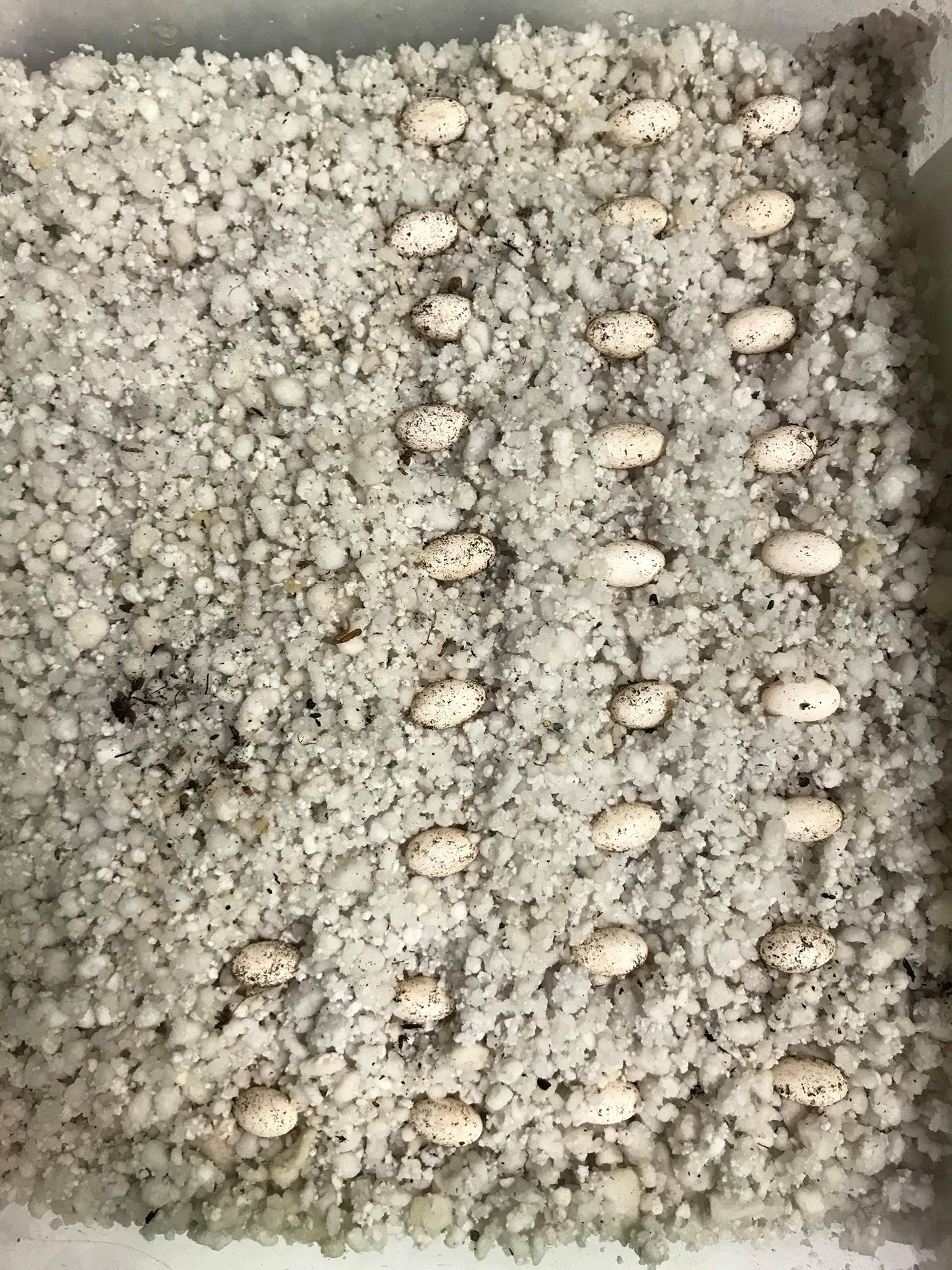
One hole, 4 inches down, 20 eggs
Bill built the full bin for his female Trioceros cristatus, a rare species from Cameroon. She was in it before he could set up the camera. She ignored the rocks and the plant, dug one big hole in the 6 inch middle section, laid her eggs about 4 inches down, and covered them halfway. He recovered 20 well-calcified eggs.
His other females have laid in a wheelbarrow of plain dirt, a pothos pot, and the dirt floor of an outdoor cage. The extra options are there for a female who can’t settle, not because every female needs them.
“So no, it really isn’t that complicated.” — Bill Strand
Mistakes to avoid
- Soaked soil. Without drainage, water collects at the bottom, and she won’t lay there. This is also the catch with soil and bioactive cage floors.
- A bin she can tunnel in. Tunneling is a sign she can’t find what she needs, not a behavior to encourage.
- No privacy. Digging leaves her exposed on the ground. Give her cover and watch from a distance.
Keep learning every day, free.
Every Chameleon Academy Podcast episode, a new chameleon show every day, and step-by-step guides for cages, lighting and care. Free on iPhone and Android, with no account needed.
Common questions
How deep should a chameleon lay bin be?
About 4 to 6 inches of soil works for most species. Females look for a firm surface roughly half their body length down, so very deep bins of 8 inches or more are not needed.
What soil should I use in a chameleon lay bin?
A rough mix of half soil and half play sand. The exact ratio doesn’t matter as long as a hole holds its shape, and the bin drains so the soil is never soaked.
Does my veiled chameleon need a lay bin if she’s never been with a male?
Yes. Female veiled chameleons often develop clutches of unfertilized eggs, so watch for the signs of a female ready to lay and give her a place to dig.
Do I need a lay bin in a bioactive or soil-floored cage?
Not if the soil is kept as good digging soil with good drainage. A female won’t lay in soaked soil, so the floor’s moisture has to be dialed in.
How do I know my chameleon is about to lay eggs?
She moves low in the cage, paces and climbs the walls, and often stops eating within the week before laying. Her body will have grown wider over the previous weeks.
Sources and further reading
- Chameleon Medical: Dystocia and Egg BindingChameleon Academy’s guide to when a female can’t pass her eggs
- Breeding Panther ChameleonsChameleon Academy’s care guide to breeding, from pairing to incubation
