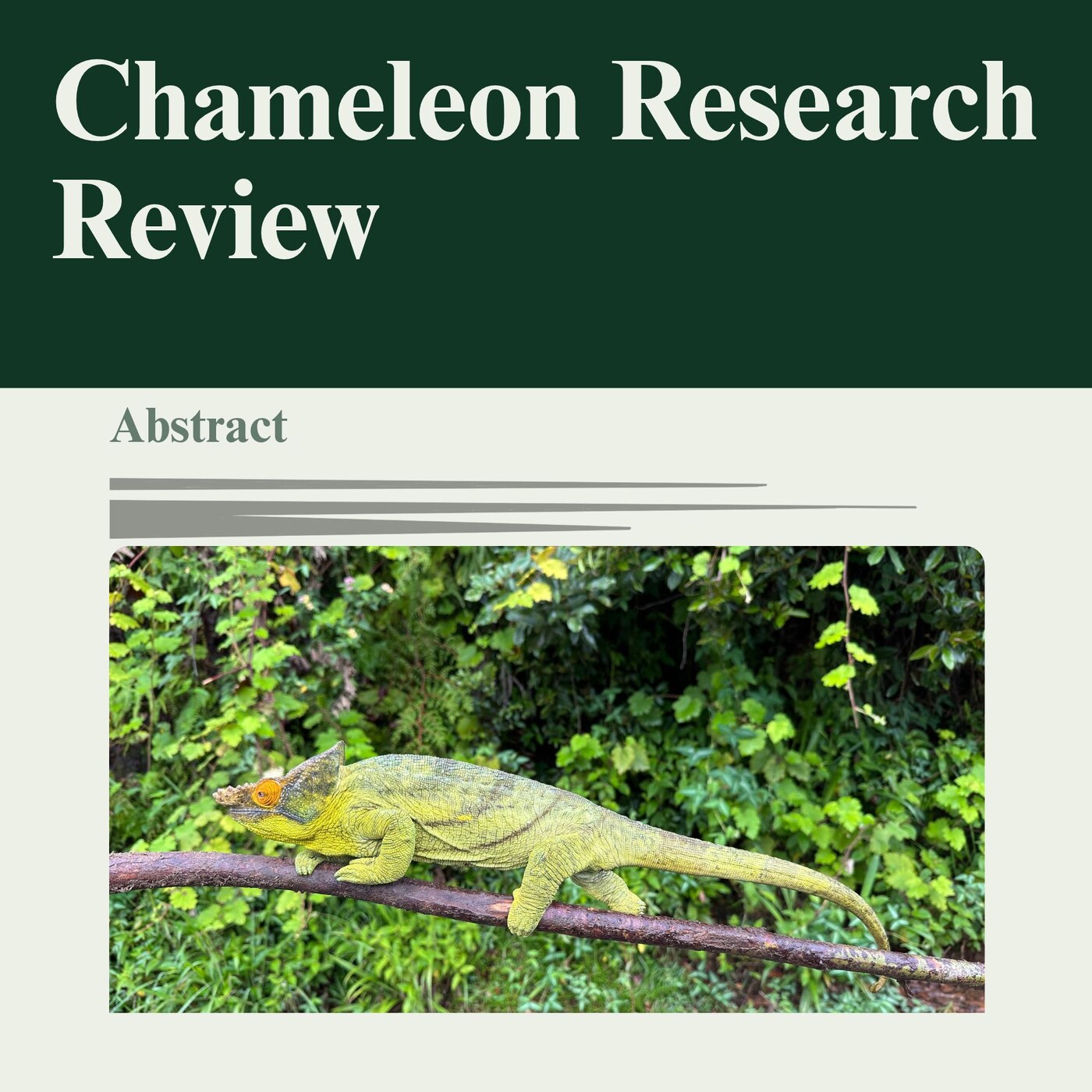
Can Feeder Crickets Give Your Chameleon Pinworms?
What a 2005 study of 2,500 commercial crickets found, and what it can’t tell you. Part 1 of the series Of Crickets and Pinworms.
Probably not, if they come from a commercial cricket farm. A 2005 study examined 2,500 house crickets from five U.S. commercial suppliers and found no pinworm (oxyurid) eggs, using a method shown to recover eggs from cricket material. Pet stores, reptile shows and other suppliers weren’t tested, so this is strong evidence against routine contamination, not proof it never happens.
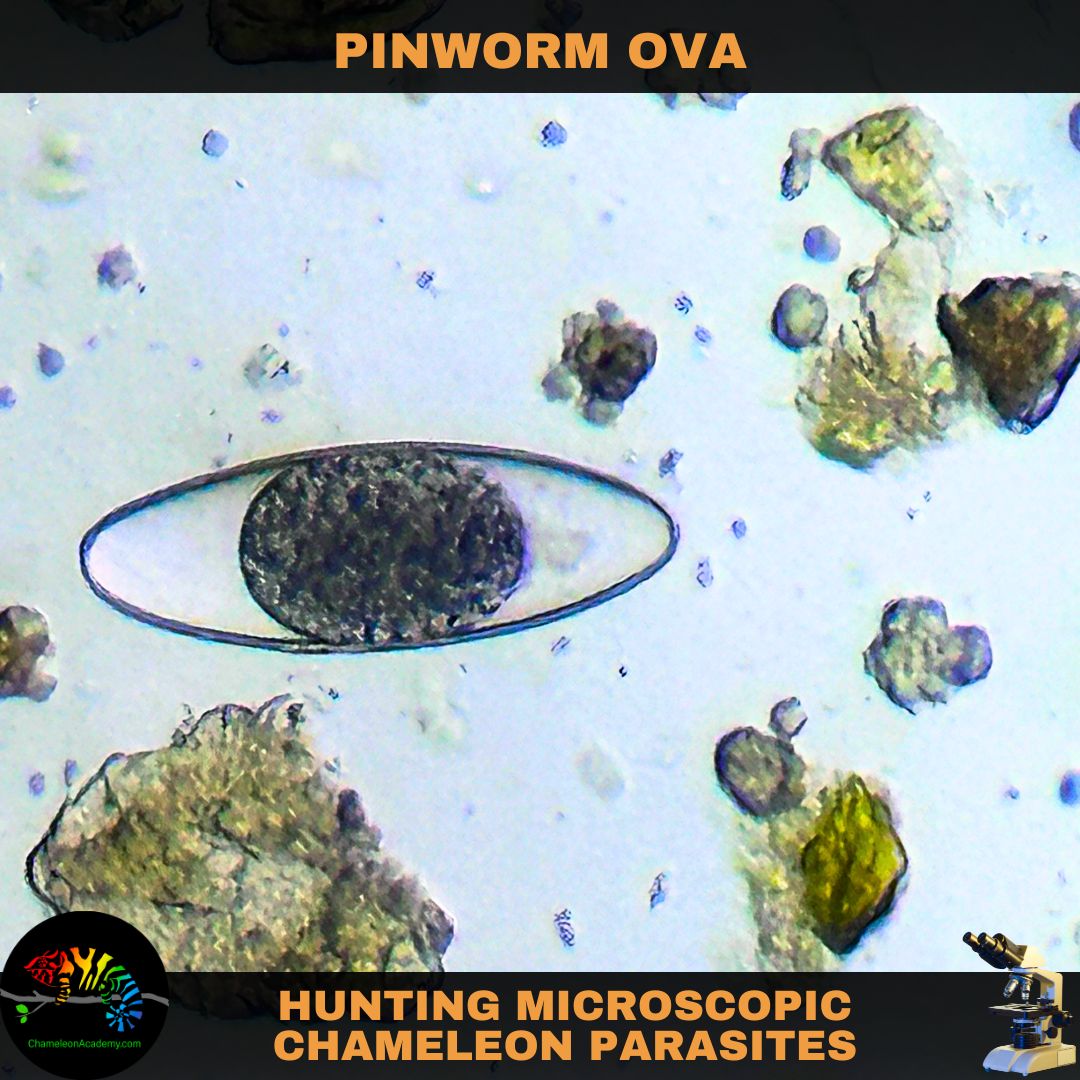
The study at a glance
The paper this episode examines, and exactly what it tested.
An evaluation of the gray cricket, Acheta domesticus, as a source of oxyurids for reptiles
Jonathan Klarsfeld and Mark Mitchell · 2005
- The question
- Are commercially bred house crickets a source of pinworm (oxyurid) eggs for reptiles?
- The sample
- 500 adult crickets from each of five commercial suppliers, 2,500 in all, from several parts of the United States. None of the farms housed reptiles.
- The method
- The crickets were homogenized and passed through a series of sieves. The retained material went through sucrose flotation, the same basic principle as a fecal exam, and was examined under a microscope.
- The check on the method
- Material from reptiles known to carry pinworms was added to cricket samples and run the same way. In a recovery test, about 1,000 eggs were added and 9.7% were recovered.
- The result
- No oxyurid eggs were found in any of the commercial cricket samples.
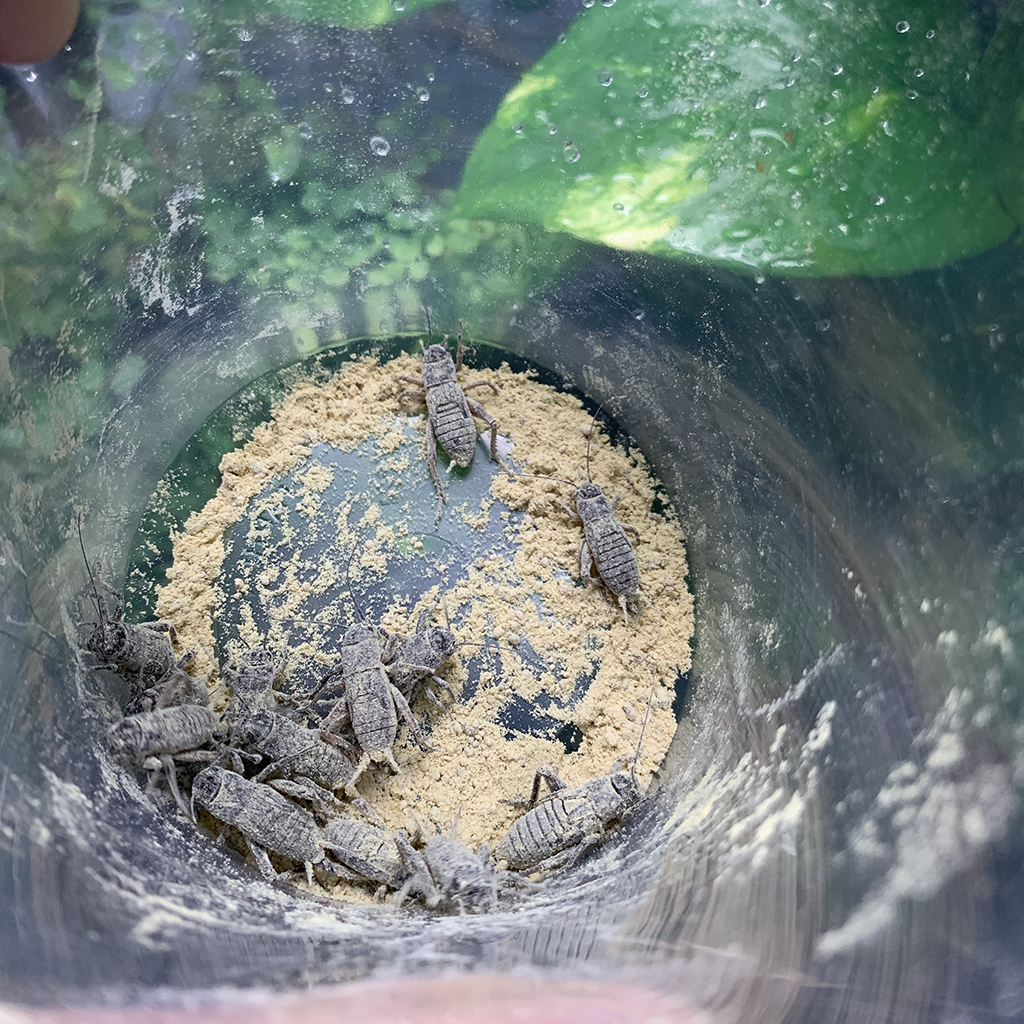
A negative result needs a test that could have said yes
Finding nothing only means something if the search could have found it. That’s the job of a positive control: deliberately adding the thing you’re looking for and checking that your method catches it.
Here, the method recovered only part of the eggs that were added. So it can’t tell you the exact chance of catching a cricket with just a few eggs. But it did show the method could find pinworm eggs in cricket material, which makes the zero a real result rather than a blind spot.
“Did I look in every corner? … Or did I glance around for 30 seconds and declare the enclosure insect-free?”
What the study shows, and what it doesn’t
A result is only as broad as the question the study actually tested.
What it shows
- The commercial suppliers tested were not a detectable source of pinworm eggs.
- The method could recover pinworm eggs from cricket material.
- This is meaningful evidence against the idea that commercially bred house crickets are routinely contaminated.
What it doesn’t show
- Every cricket supplier, or every stage of the supply chain.
- Crickets from pet stores or reptile shows.
- That a cricket could never carry parasite material under unusual circumstances.
- A precise detection limit for very light contamination.
Four ways a cricket could be involved
The series tests each route separately, because each needs different evidence. Disproving one is not proof of another.
Biological host
The pinworm uses the cricket as part of its life cycle. To show it: a real host relationship.
Pass-through vehicle
The cricket eats something contaminated and the eggs survive its gut until a chameleon eats it. To show it: survival through digestion.
Mechanical carrier
Eggs stick to the outside of the cricket, like mud on a boot. To show it: contamination and transport.
Not involved
The chameleon eats crickets and has pinworms, but caught them somewhere else. To show it: look elsewhere for the source.
What this means for your chameleon
- Don’t assume the crickets are to blame. If a fecal test comes back positive for pinworms, the infection may have come from somewhere else.
- Know where your crickets come from. The study covers crickets from commercial suppliers. Crickets that pass through a pet shop or a reptile show weren’t tested either way.
- Ask a reptile vet what a positive fecal test means. Not every egg found means an established infection, and whether to treat is the vet’s call for your animal.
- Read past the abstract. The headline result was “no eggs.” The methods are what tell you how far that result reaches.
Where the series goes next
Episode 1 sets up the investigation. The next episode starts with the biology: could a reptile pinworm use a cricket as part of its life cycle, and could something simply pass through a cricket’s gut?
The question bank
Some questions only matter if a route turns out to be real, so they wait until then. For example: if a pinworm turns up in a cricket, what kind of pinworm is it? If eggs turn up in a chameleon’s feces, is that an established infection or material just passing through? If parasites turn up on an insect farm, did they come from the insects or the surroundings?
Keep learning every day, free.
Every Chameleon Research Review episode, a new chameleon show every day, and step-by-step guides for cages, lighting and care. Free on iPhone and Android, with no account needed.
Common questions
Can feeder crickets give my chameleon pinworms?
Commercially bred crickets are an unlikely source. A 2005 study of 2,500 house crickets from five U.S. commercial suppliers found no pinworm eggs. It did not test crickets from pet stores, reptile shows or other suppliers, so it can’t rule out every source.
What are oxyurids?
Oxyurids are the group of nematodes commonly known as pinworms. They are frequently found in captive reptiles, including chameleons.
Are crickets from pet stores or reptile shows covered by this study?
No. The study sampled crickets shipped directly from commercial suppliers whose farms did not house reptiles. Crickets that pass through a pet shop or a reptile show meet different conditions that the study does not address.
My chameleon has pinworms. Did they come from the crickets?
Not necessarily. A chameleon eating crickets and a chameleon having pinworms can both be true without one causing the other, and the infection may have come from somewhere else. A reptile veterinarian who knows your animal can interpret the test and decide whether treatment is needed.
The study only recovered 9.7% of the eggs it added. Is the result still valid?
Yes, within limits. The recovery test showed the method could find pinworm eggs in cricket material, even though it did not find every egg. That makes the negative result meaningful, but it does not set a precise detection limit for very light contamination.
Transcript
Read the full transcript
Some of the most interesting questions begin with something we think we already understand. A familiar observation. An explanation that seems to make sense. And then, if we’re curious enough, the realization that there may be much more to the story. Science begins when we decide to look a little closer.
If you have spent any time in chameleon groups or on chameleon social media, you’ve probably seen this moment. Someone posts a picture of their chameleon. Maybe the animal isn’t doing well. Maybe a fecal test has come back positive for parasites. And somewhere in the comments, someone says, it probably came from the crickets. And I understand why people say that. We know that many parasites are transmitted when an animal ingests something contaminated. We know that crickets are a regular part of our chameleons’ diets. We buy those crickets from farms, distributors, pet stores, and sometimes reptile shows. We don’t necessarily know what those crickets have been exposed to along the way. So the idea that crickets might be carrying parasites into our chameleon’s enclosures is not ridiculous. It’s a reasonable hypothesis. But a reasonable hypothesis is not the same thing as an established fact.
Welcome to the Chameleon Research Review. This is where we take questions from the chameleon community and follow the science as far as it will take us. And I want to emphasize that phrase, follow the science. We aren’t here to debunk things. We aren’t here to defend what we already believe. We’re here to investigate. Sometimes that means we discover that our original understanding was right. Sometimes it means we discover that we were wrong. And sometimes we find that the answer is more complicated than the question that got us started.
Today, we’re investigating a question that comes up regularly in chameleon keeping. Do commercially bred crickets transmit pinworms to our chameleons? Fortunately, we have something better than speculation. We have a published study that actually investigated the question.
In 2005, Jonathan Klarsfeld and Mark Mitchell published a paper entitled, An Evaluation of the House Cricket, Acheta domesticus, as a source of oxyurids for reptiles. Oxyurids are the group of nematodes commonly known as pinworms. They are frequently encountered in captive reptiles, including chameleons. The study examined 2,500 commercially bred house crickets from five suppliers. The researchers were looking for oxyurid eggs, and the result was straightforward. They found none. Now, if we stopped right there, we might be tempted to say the question is settled. Commercial crickets don’t carry pinworms. Case closed. But I want us to slow down. A scientific result is only as useful as the question the study actually tested. We need to understand what the researchers did, what their methods could detect, and what conclusions we can reasonably draw from their findings. Because there’s a big difference between saying, we tested these crickets and didn’t find eggs, and saying commercial crickets can never carry pinworm eggs. One is a result, the other is a much broader claim. Let’s look at the study.
The researchers obtained 500 adult crickets from each of five commercial suppliers, giving them a total sample of 2,500 crickets. The suppliers were located in several different parts of the United States. Importantly, the farms did not house reptiles. This detail is worth remembering. The researchers were not sampling crickets from every possible point in the feeder insect supply chain. This means that getting crickets from the reptile show or a pet shop is a set of different conditions the study does not address. They were examining crickets from commercial suppliers with particular conditions shipped to the end customers. The researchers processed the crickets by homogenizing them and passing the material through a series of sieves. The idea was to separate the material into progressively smaller fractions so that parasite eggs could be recovered and examined. The retained material was then processed using sucrose flotation and examined under a microscope. This is a familiar approach in veterinary parasitology. Many of us have seen and used the same basic principle used in fecal examinations. A flotation solution helps separate parasite eggs from other material so they can be observed under a microscope. The result of the study was zero oxyurid eggs in the commercial cricket samples.
But here’s the question I always want to ask when I see a negative result. How do we know the test would have found something if something had been there? That’s where the positive control becomes important. Imagine that I tell you that I searched an enclosure for a particular insect and didn’t find one. How reassuring is that result? Well, it depends. Did I look in every corner? Did I know what the insect looked like? Was I using a method that would actually reveal it? Or did I glance around for 30 seconds and declare the enclosure insect-free? A negative result is not automatically meaningless, but we have to know something about the search. To validate the method, the researchers used material from reptiles known to carry oxyurids. They added that material to cricket samples and processed the samples using the same method. They also conducted a recovery experiment in which approximately 1,000 eggs were added to a cricket sample. They recovered 9.7% of the added eggs. That recovery rate isn’t perfect. It tells us the method did not recover every egg that was introduced, but it does demonstrate that the method could recover oxyurid eggs from a cricket sample. And that is meaningful. It doesn’t give us permission to say that the test would detect every possible level of contamination. It doesn’t tell us the precise probability of detecting a cricket with a very small number of eggs. And it doesn’t establish a formal detection limit for every possible sample. What it does tell us is that the researchers tested whether their procedure would recover eggs from cricket material, and they demonstrated that it could. So we shouldn’t dismiss the negative result simply because the recovery wasn’t perfect. Five suppliers. A total of 2,500 crickets. No oxyurid eggs detected. That’s a legitimate result.
But we’re going to look deeper and challenge it. This is a good example of why reading beyond an abstract matters. If all we remember is the result, we miss the information that helps us judge how much confidence to place in it. And we miss the opportunity to deepen our understanding of the situation. If we take the conclusion on the run, we rob ourselves. Before we decide what the study means, let’s think through the ways crickets could theoretically transmit pinworms.
I can identify four broad possibilities. First, the cricket could be a biological host. In this scenario, the parasite would actually use the cricket as part of its life cycle. The cricket would not simply be carrying something accidentally. The parasite would have a biological relationship with the cricket that allows it to survive or develop before reaching the chameleon. Second, the cricket could be a pass-through vehicle. The cricket might eat something contaminated. The parasite or its eggs could survive long enough inside the cricket’s digestive tract to be carried to the chameleon when the cricket is eaten. The cricket would not necessarily be infected. It would simply be transporting something through its digestive system. Third, the cricket could be a mechanical carrier. This is the simplest possibility. A cricket walks through contaminated material. Eggs stick to its body. The cricket gets collected, shipped, sold, and eventually eaten by a chameleon. The cricket isn’t infected. It’s carrying something on the outside, like mud on a boot. Fourth, the crickets might have nothing to do with the infection. The cricket has pinworms. The chameleon eats crickets. Those two facts exist together, but that doesn’t mean one caused the other. The animal may have acquired the infection somewhere else. These four possibilities give us a framework for the investigation. And notice that they’re not four different ways of saying the same thing. They are different routes with different biological requirements and different kinds of evidence needed to demonstrate them. If a cricket is a biological host, we need to establish a host relationship. If it’s a pass-through vehicle, we need to establish survival during digestion and passage. If it’s a mechanical carrier, we need to establish contamination and transport. And if the cricket is unrelated, we need to look elsewhere for the source. And we shouldn’t treat evidence disproving one pathway as proof of another.
I want to introduce one more idea that we’ll use throughout the series. I’m going to call it our question bank. These are questions we need to answer, but we don’t necessarily need to answer all of them immediately. If a particular pathway turns out to be biologically impossible, there’s no reason to spend three episodes investigating a detail that only matters if that pathway is real. But if a pathway survives scrutiny, we may need to go back and answer some of those questions. For example, if we find a pinworm in a cricket, we need to ask what kind of pinworm it is. If we find eggs in a chameleon’s feces, we need to ask whether they represent an established infection or material that’s simply passing through the animal. If we find parasite stages in an insect farm, we need to ask whether they came from the insects themselves or from the surrounding environment. The questions build on each other.
That’s how we’re going to approach this. So what can we conclude today? The 2005 study gives us meaningful evidence against the idea that commercially bred house crickets are routinely contaminated with reptile oxyurid eggs. But it doesn’t test every cricket supplier. It doesn’t test every stage of the supply chain. It doesn’t test pet stores or reptile shows. And it doesn’t prove that a cricket could never carry parasite material under unusual circumstances. So for now, I think we have earned a fairly strong but carefully limited conclusion. The commercial cricket suppliers tested in this study were not a detectable source of oxyurid eggs. That’s a good starting point. And I want to point out something about the way we arrived there. We didn’t have to reject the study because it had limitations. We didn’t have to pretend the limitations didn’t exist. We can recognize that it provides meaningful evidence while also recognizing the boundaries of what it tells us. That’s the kind of thinking I want to encourage.
But we have four possible pathways to examine and we haven’t evaluated them. In the next episode, we’re going to start with the biology. We’re going to ask whether a reptile pinworm could actually use a cricket as part of its life cycle and whether something could simply pass through a cricket’s digestive system. We have just started on our journey into the scientific method to answer our questions. And make no mistake, these are journeys. Rarely will these explorations go as we expect and it is never clean. Will we have an answer at the end or more questions? Or, more likely, both. Stay curious, stay skeptical, and I’ll see you next time.
Sources and further reading
- Klarsfeld, J. and Mitchell, M. (2005). An evaluation of the gray cricket, Acheta domesticus, as a source of oxyurids for reptiles.The study examined in this episode: 2,500 commercial house crickets screened for pinworm eggs.
- How to prevent chameleon parasitesChameleon Academy guide to keeping parasites out of your chameleon’s enclosure.
- Hunting microscopic chameleon parasitesWhat pinworm eggs and other parasites look like under the microscope.
- What to do when your chameleon has parasitesNext steps after a positive fecal test.
- Basics: Feeding chameleonsChoosing, keeping and feeding feeder insects.
Related episodes