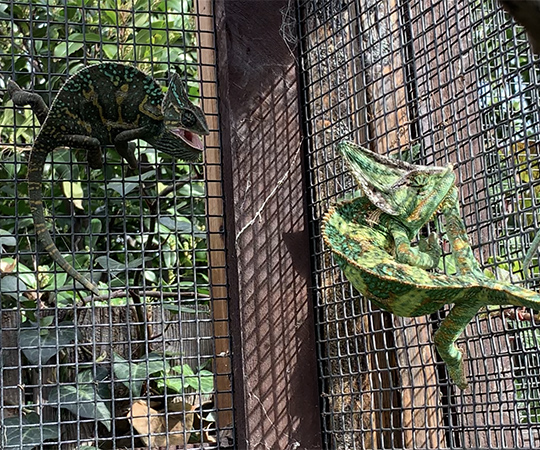
Summary: The Chameleon Cage
- Chameleons need an open area for heating up and getting UVB
- Chameleons need a hidden area for feeling secure
- Chameleons prefer horizontal branch perching
- You need a basking branch, a drinking branch, and a hiding branch
- Solid side (PVC or Glass) cages must be used if you need more control over temperature and/or humidity
- Live plants are best
- When starting out, keep the cage floor bare – no substrate necessary
What the Chameleon Cage Should Look Like
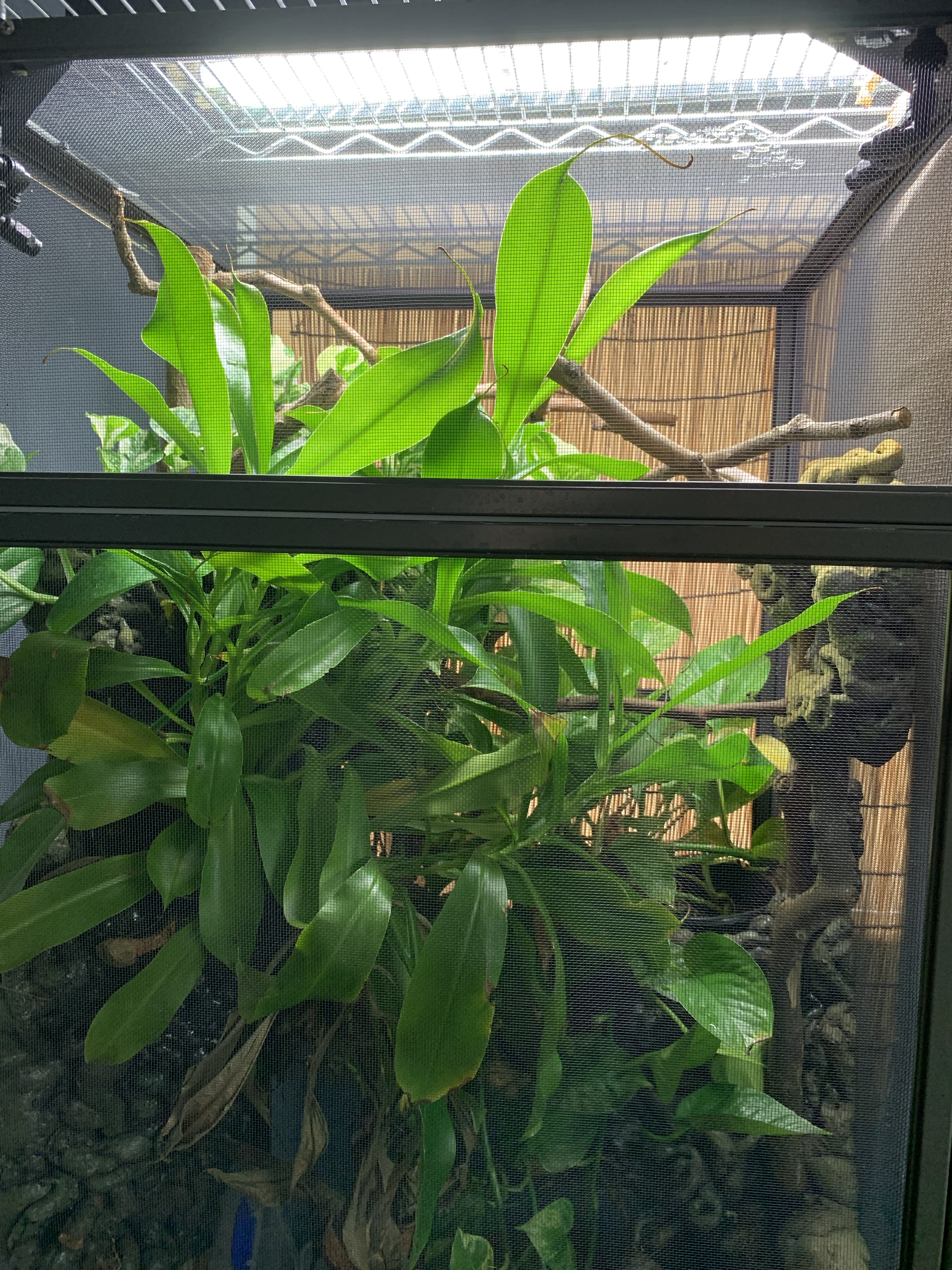
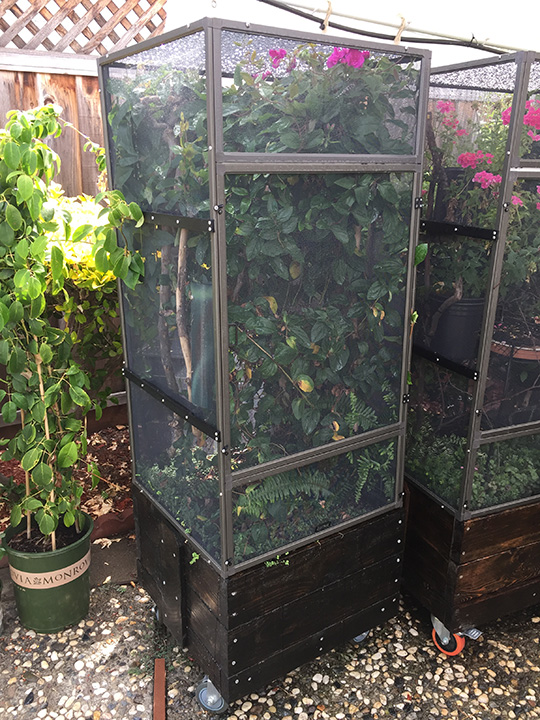
The first thing you need to know about chameleons is what their home should look like. The cage shown here is what a chameleon cage should look like. Here is what is important with the cage that you need to replicate
- There is an open area that has light, a basking area, and UVB
- There is a dense planted area where the chameleon can hide and feel secure
- There is a network of branches that allows the chameleon to access all the needed areas including heat, UVB, food, water, and cover
- The network of branches is horizontally orientated. Vertical is fine for getting around, but chameleons generally like to rest horizontally.
The key to creating an effective cage is understanding how to create gradients and microclimates so your chameleon and regulate temperature without bothering you. This podcast episode explains one of the most critical concepts in chameleon husbandry.
Cage Size
For the most common species of chameleons, including the Veiled, Panther, and Jackson’s Chameleons, you should have a minimum of a 2’ x 2’ x 4’ high cage. Wider format cages are better. The 30” and 36” high cages that are commonly sold at pet stores and reptile shows are sufficient starter cages for juveniles, but chameleons grow up quickly. Make plans for the adult size cage and there is no need to wait. If a juvenile chameleon is old enough to be sold, it is old enough to go into a properly filled adult size cage. There is no problem if you choose to start them in a smaller cage, but if the chameleon is so young that it “needs” a smaller cage then reconsider buying this chameleon. Unfortunately, there are places that will sell a chameleon too young to go to a new home. There are so many reasons why it is worth paying the money to get your chameleon from a reputable breeder. This is just one!
Screen vs. Glass
As many chameleon species are comfortable at the temperature and humidity range that human houses are kept at, screen cages are popular for chameleons. But if you selected species has different requirements than you home provides then a PVC sided or even glass terrarium is appropriate. The PVC sided cages give more control over humidity and the glass terrarium gives more control of both humidity and temperature.
The commonly repeated advice that chameleons must be kept in screen cages is incorrect. Both screen cages and glass cages are tools that have their place. The more screen the more ventilation and the dispersion of heat and humidity. Make a judgement based on your environment. If you feel you may benefit from the insulation properties of glass then listen to this podcast with Dr. Chris Anderson about how he has kept his chameleons in glass terrariums.

Plants
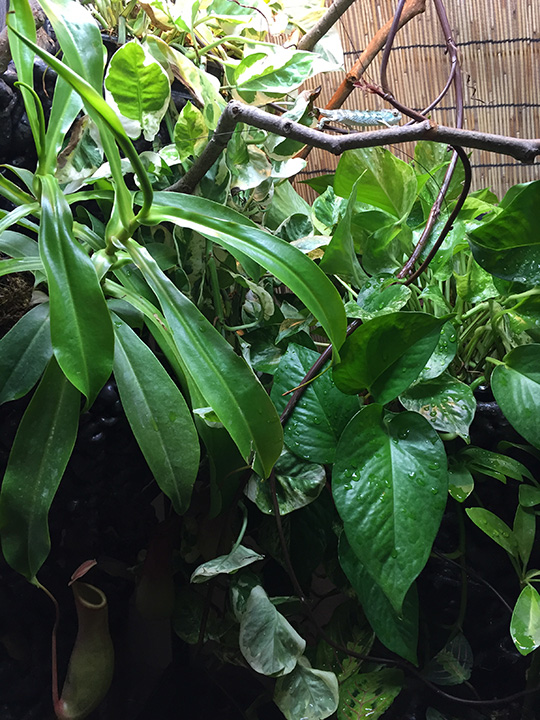
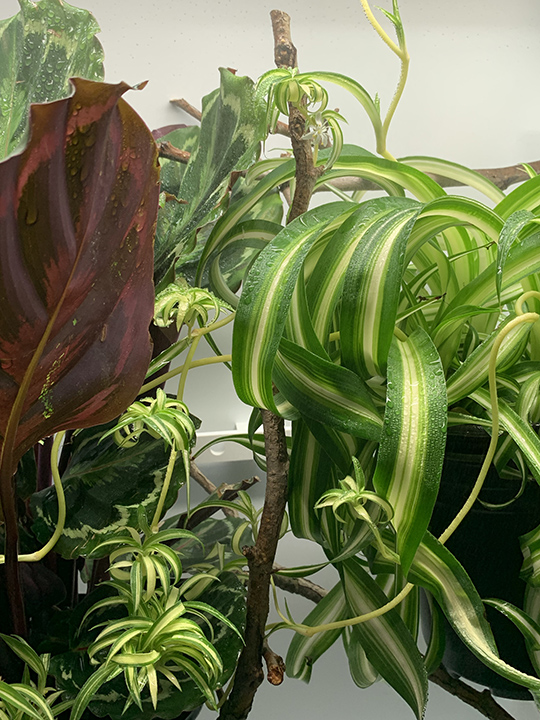
Plant cover is critical for the security of your chameleon. Both fake plants and live plants will be able to provide the cover and leaf drinking that chameleons need. Though only the live plants will be able to provide humidity benefit. Beware of the composition of fake plants. It is safest to use only plants made for the reptile industry as the toxicity of dyes and materials on decorative plastic plants can be hard to tell. Do not use fake plants with Veiled Chameleons as Veileds are know to take bites out of leaves. If they manage to swallow plastic pieces it could have serious medical issues. Living plants are much more preferred all around. The three of the most used plants are Pothos (Epipremnum aureum), Umbrella Plant (Schefflera arboricola) and the Ficus tree (Ficus benjamina). Both the Umbrella Plant and Ficus tree may be placed on the bottom of the cage floor. Pothos is best as a trailing plant and can be mounted to the sides of the cage with equipment such as the Dragon Strand Dragon Ledges.
No matter what plants you use, their functions are 1) to provide a hiding space so they can feel safe. That means enough leaves that you can’t see them when they want to hide. 2) surfaces to drink. This means that there is a drip or mist systems that produces water on leaves that are within easy reach of a perching branch. And 3) To provide a humidity pocket. Live plants produce humidity which is beneficial for chameleons.
The ideal set-up will have a leafy place where the chameleon can disappear and be surrounded by plants.
Branches
Chameleons need perching space and they like to perch horizontally. This requires that branches be placed horizontally in the cage. There are a number of ways to accomplish this in a screen cage. The highest quality solution is to install Dragon Strand Dragon Ledges as they will allow you to mount both branches and plants. Cheap solutions include thumb tacks through the screen or hanging from fishing line from the cage frame. Some people create wood lattices across the side of the cage. Whatever the strategy used, the branches should be horizontally orientated and connected by vertical and diagonal branch pathways. Give access to as much of the cage as is possible! Branches should be in various diameters with the maximum being just large enough that they cannot wrap their feet totally around it. They can use thicker branches for climbing, of course, but the thinner ones are preferred. Artificial vines can be used, but just be careful that the porous ones do dry out during the day. You do not want your chameleon perching on constantly wet surfaces.
There are three most important branch functions.
- The basking branch. This is the branch that is where the chameleon gets its heat and UVB. This branch is usually six inches from the top under the UVB lamp appropriate for the species. The basking bulb shines on the spot of highest UVB exposure
- The drinking spot. This is the branch that is close enough to the leaves that have water dripping down on them for drinking. Now, this doesn’t have to be a separate branch, but there must be branch space that performs this function!
- The hiding branch. This is a horizontal branch that allows your chameleon to hide behind leaves. Shy chameleons will go there to hide, sleep, and retreat when they just don’t feel like dealing with your nonsense, or a stranger comes in the room.

The Cage Floor
Most cages come with a plastic floor. This is sufficient for keeping your chameleon. If you have a drainage tray then a network of drilled holes will encourage drainage. Some people use paper towels, puppy pee pads, or carpet in the floor of the cage to catch the excess water. The best solution is to get a drainage tray or drainage system for your cage. Adding an absorbent material to the bottom of the cage will hold poop and water together and it is up to you to remove and deep clean the system before escaped feeder insects run by and tip toe through the bacterial mess.

Substrate
A substrate refers to including a soil floor in your husbandry. Including a substrate for a chameleon cage is not necessary for the chameleon and, for the standard chameleons, offers little direct benefit. But, at the same time, it can be incredibly rewarding for you to grow live pants or even explore a bioactive substrate. As a beginner it is best to keep a plain floor. Substrates are a complication that is best to tackle once you can confidently care for your chameleon. But as a chameleon keeper grows in their skill they will more and more embrace the naturalistic approach and a soil substrate will be just one component in the keeping of an environment rather than just the keeping of a chameleon.

Outdoor Caging
Allowing your chameleon some outdoor time introduces a number of challenges of its own. Most of the time you can get some indirect sunlight – which still has UVB in it – by placing your screen cage out on a covered patio so it gets direct sunlight during the morning, but is shaded once the day temperature starts to rise. Direct sunlight hitting a cage set up for our weak indoor lights will result in dead chameleons from overheating. But outdoor keeping has so many benefits that it is worth making it happen! Use screen cages only. Listen to this podcast to prepare before taking your chameleon outside.
Multiple Chameleons and Co-Habitation
Chameleons should be kept individually. They can survive for a time together, but this is a low grade stress situation for them. This is one of the community’s biggest, yet most avoidable problem due to human beings insisting they need to be together or just not understanding chameleon body language. It does not help that pet store owners and reptile show vendors continue to sell pairs of chameleons with the instruction that they can be kept together. Incredulously, some insist that the pair loves each other and can’t be separated! This is a misinterpretation of the dominance play and their perching close together is anything but “love”. The bottom line is simple – do not keep chameleons together. This includes Jackson’s Chameleons. In fact, I will say especially Jackson’s Chameleons to try and reverse so much misinformation still being pushed in the community. So many Jackson’s Chameleon have suffered for this. Please do not perpetuate this habit. Stick with the rule of one chameleon per cage and you will have a much more enjoyable chameleon keeping experience.