
Chameleon Shedding Guide
Updated April 2026 to reflect a corrected understanding of the shedding mechanism
What is a Chameleon Shed?
The shedding process looks like your chameleon has come down with a horrible mummy disease! To shed, the entire skin surface is separated from the new skin underneath by fluid and enzymes which loosens the bond between the old and new skin until the old skin cracks off and is rubbed away.
A healthy shed can take a couple hours. The chameleons will suddenly “explode” in white shreds. An unhealthy shed, on the other hand can take days as pieces slowly fall off and some pieces left stuck on.
During the shed the chameleon may rub his body against sticks and gape dramatically to loosen the skin. He may also try to pull pieces off with his feet. At the end of it all, your chameleon will have a new, brightly colored skin and you will have a pile of white shed skin at the bottom of the cage (or strewn about in the leaves).
How to Tell if Your Chameleon is Shedding
Before the peeling of the skin, a shedding can be identified by your chameleon seeming to get cloudy. The colors will be muted. This is the start of the skin separating from the body. The shedding skin will soon break in places and start the peeling off.
If the shed is not coming off cleanly there could be complications. In an unhealthy chameleon some dry skin patches will remain. This can be dangerous as bacteria or fungus can grow under the dead skin – especially between the toes or the tip of the tail. This can result in losing the tip of the toe or the tip of the tail. In some cases retained shed can take the form of a ring of dead skin around a limb. This can actually become a tourniquet which can impede blood flow.
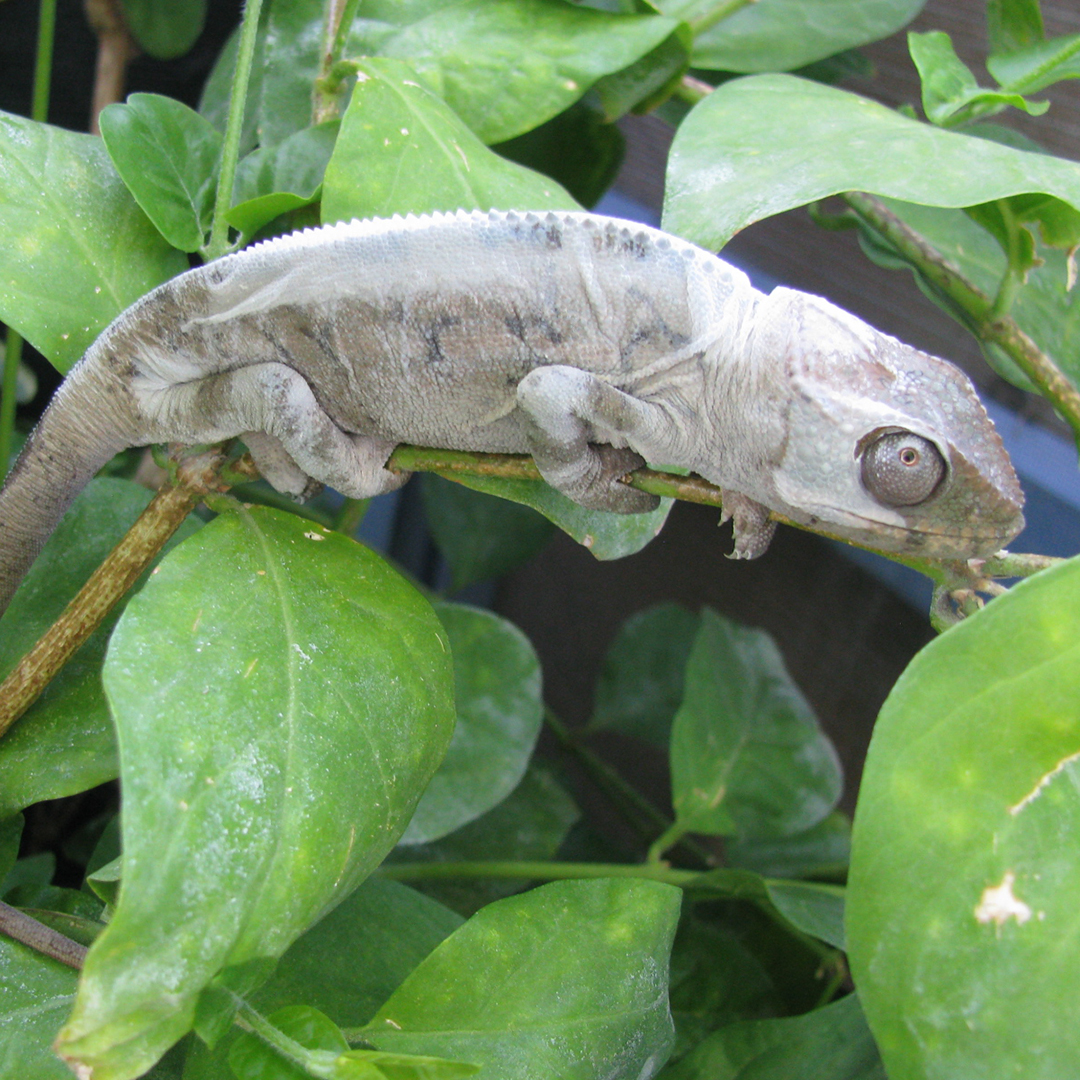
This female panther chameleon is showing a very rare sight – the beginnings of the shedding process before a breach in the old skin is made. You can see the old skin being separated from the new skin underneath.
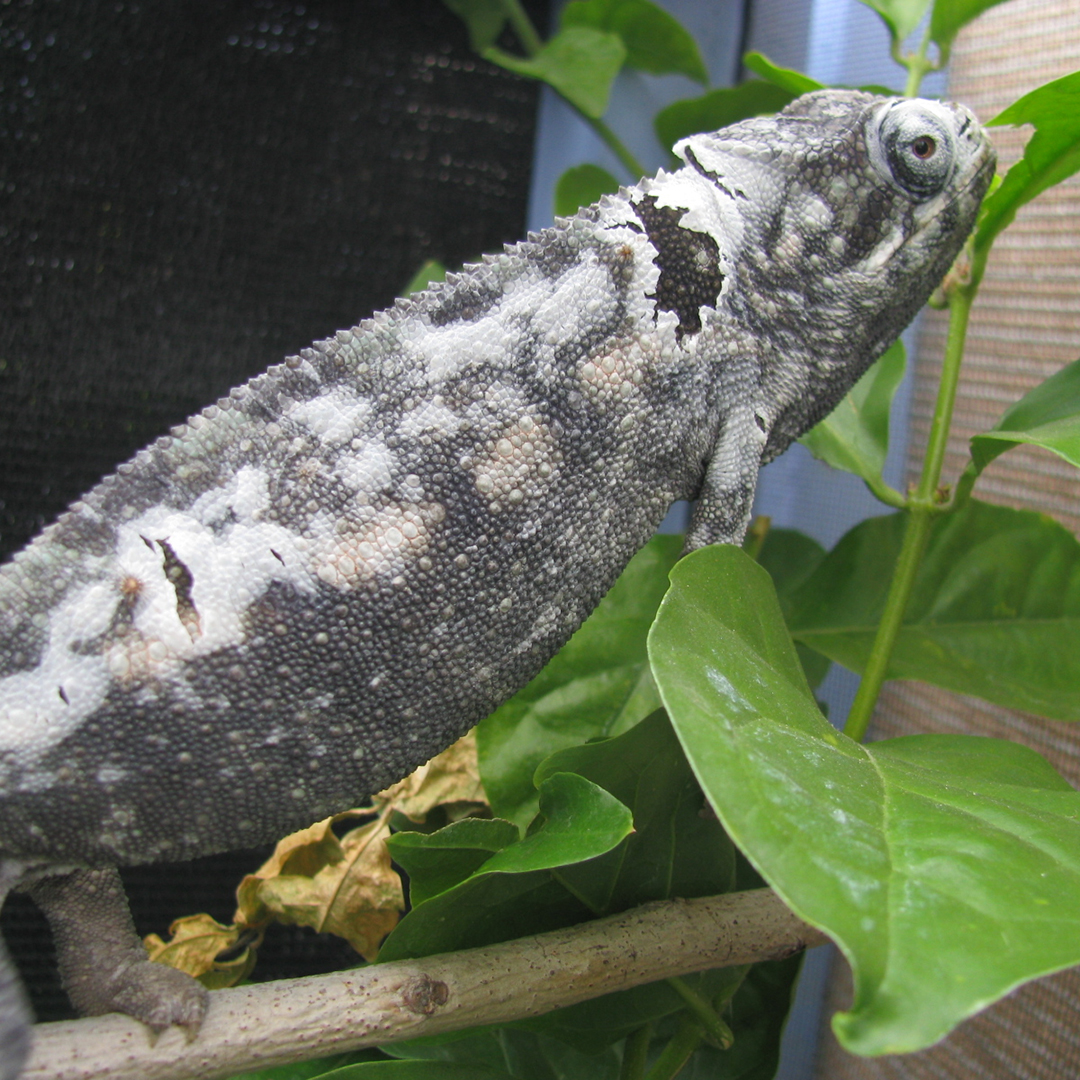
Breaches in the old skin now show through around the shoulder area and the lower flank. With the first rips, the next steps will go quite quickly.
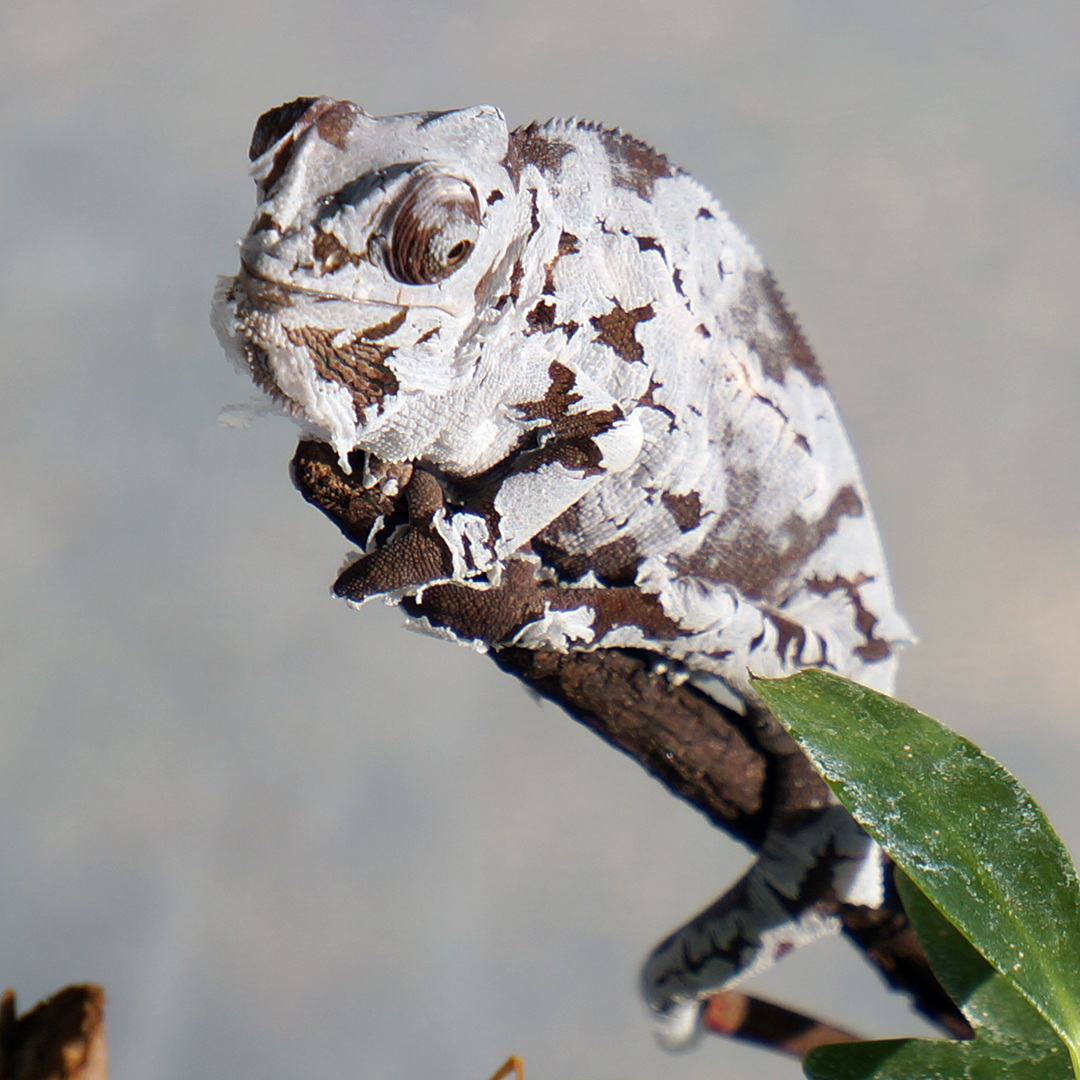
The shed skin now breaks apart all over and pieces will start to flake off.
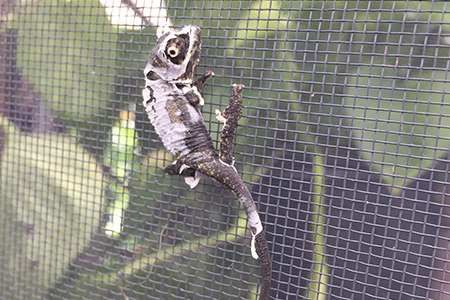
The most dramatic experiences are with first time chameleon keepers that see a shed in their newly purchased juvenile chameleon. It appears their new pet is falling apart! Not to worry. This is a sign of healthy growth!
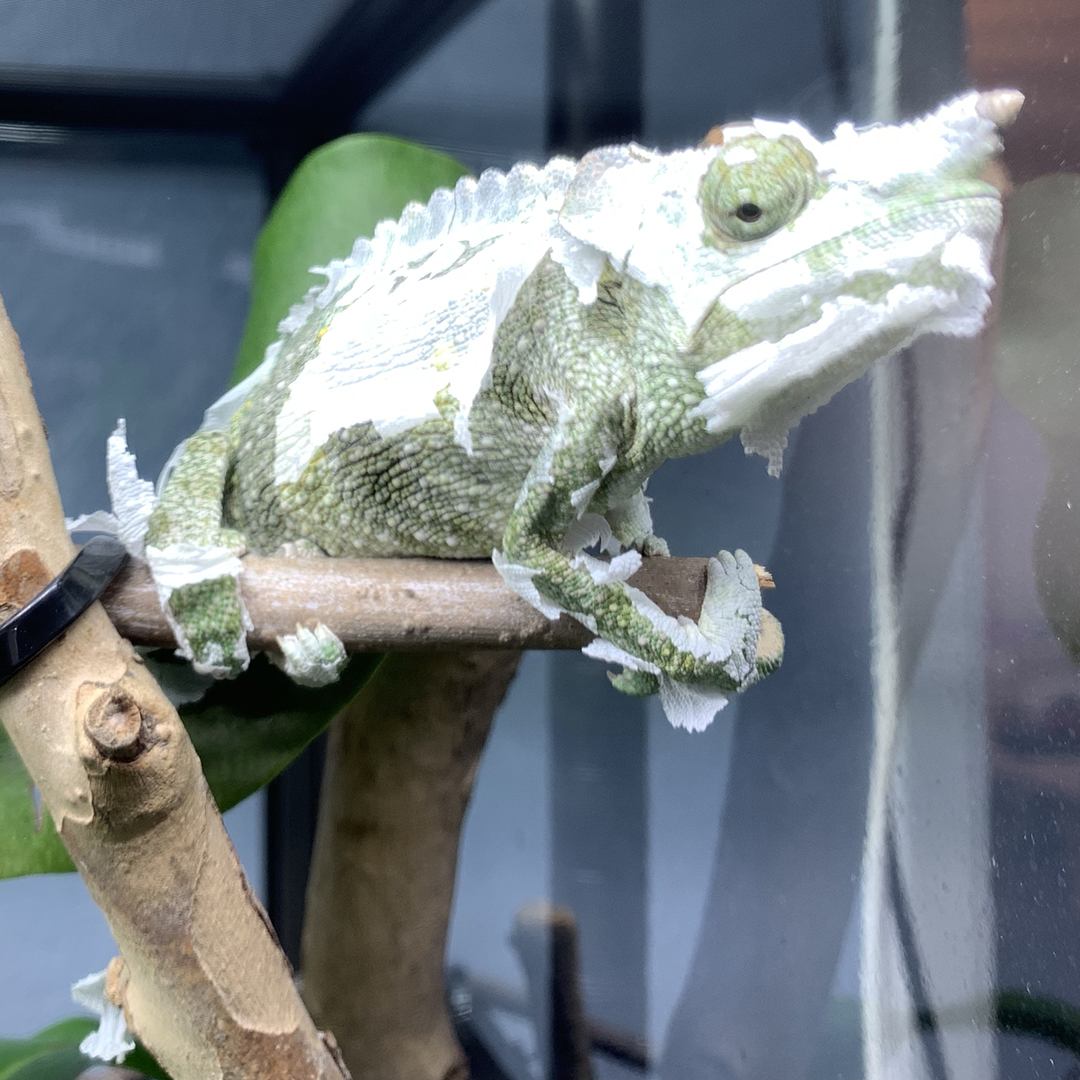
This Meller’s Chameleon is halfway through its shed.
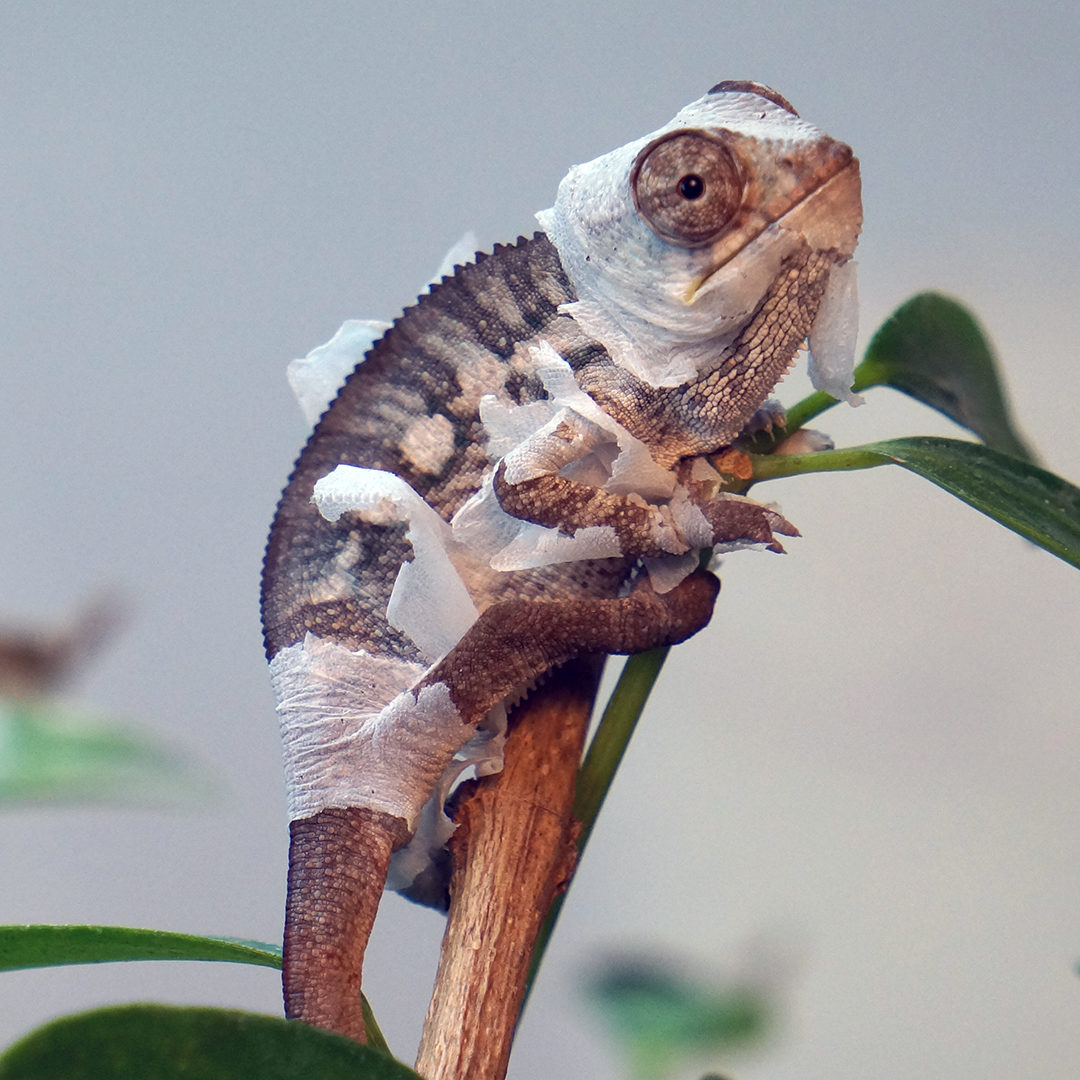
Large pieces of old skin have fallen off this young panther chameleon as it is in the final phases of shedding.

This young Jackson’s Chameleon is almost done shedding the body skin and the tail will finish the process.
What to Do About Stuck Shed
Shedding is a normal and healthy process and, usually, happens without any intervention. In the case where there is stuck shed that will not come off, a moistened Q-Tip can be used to gently rub the retained shed off. Stuck shed is not usually a problem, but it can become a medical issue if infection gets under the dead skin. Stuck shed between the toes has been an issue and is a common place for trouble to start.
If your chameleon has stuck shed, first, be aware that you picking pieces of shed off your chameleon will result in handling stress magnified. Pick shed off only if you are concerned that it will cause a health issue.
A moistened cotton swab can help loosen the skin. Be very careful not to pull the skin forcefully. If it is stuck to the skin below it you can rip the new skin and your chameleon will have an open wound. Unfortunately, it is difficult to tell how stuck the skin is so you have to go forward carefully and gently. I fully acknowledge how difficult this may be with a chameleon actively trying to squirm away.
When in doubt, a reptile vet can handle stuck shed safely and without the handling stress of a home attempt.
Tweezers can make the job easier, but they also numb your feeling for how stuck the shed is. If you use tweezers then be extra sensitive to pulling skin that is strongly adhered to the new skin below it. After a shed, pay close attention to the spaces between the toes. Retained shed there can develop bacterial or fungal infections. Check the tip of the tail as a dead skin sheathe on the tip of the tail can cause the tip of the tail to become necrotic.
Check for rings of retained shed on limbs and tail. This can impeded blood flow and the ring needs to be cut.
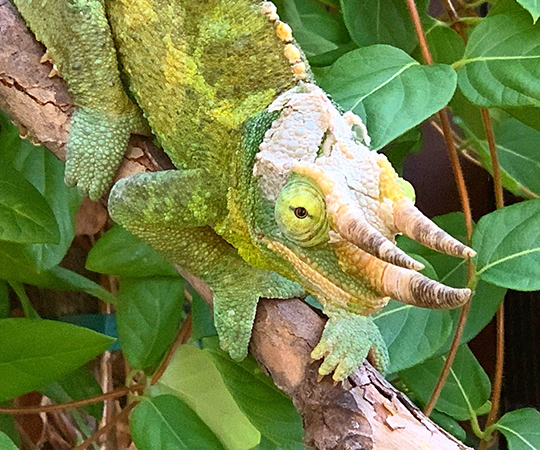
This Jackson’s Chameleon has remnant shed on his head which is being stubborn. In this case you can gently try to lift the old skin off, but do not force it. If the skin is stuck to the new skin for whatever reason you could cause damage to the new skin.
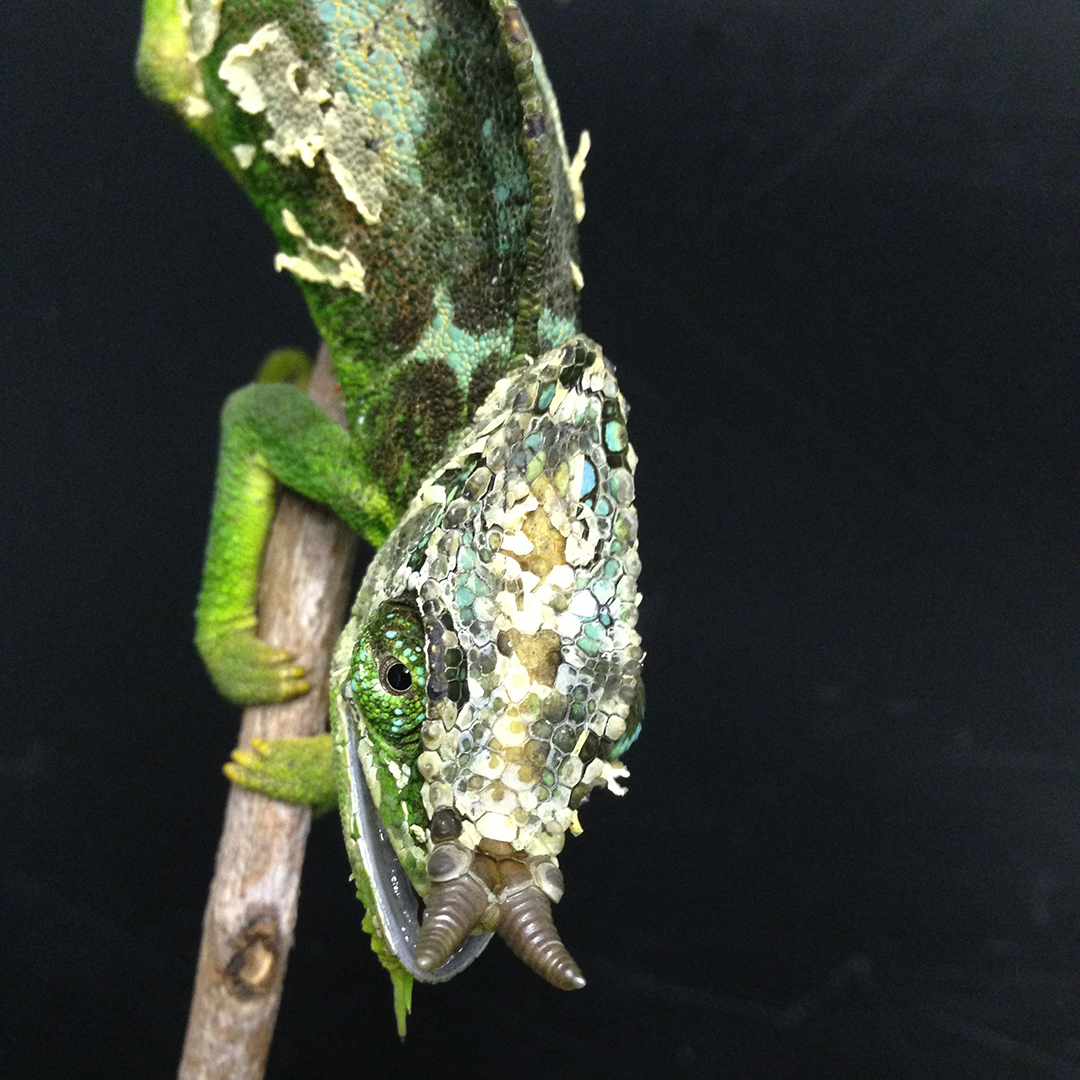
This Trioceros quadricornis (Four-horned Chameleon) was imported in the middle of his shed which resulted in an incomplete shed and required patient removal over time.

Another Trioceros quadricornis (Four-horned Chameleon) in an incomplete shed.
Prevention & Root Cause
Shedding is a mirror of health. The chameleon must be well hydrated and in good physical condition for the new skin to develop fully and the fluid and enzymes to successfully detached the old skin. Retained shed stuck to the body is a sign that the chameleon had an issue going through the process. The proper response is to make sure the hydration and nutrition and temperature/humidity is reviewed.
It is widespread that humidity plays a part in whether the shed is “good” or not. Humidity plays a part in whether the chameleon is healthy and hydrated enough to have a good shed. But we should not lower the humidity during shedding time — this dehydrates the chameleon when they need that hydration most.
What is actually happening is that shedding is driven from the inside out. The new skin forms underneath the old, and the body produces enzymes and fluid that accumulate in the gap between the two layers, loosening the bond until the old skin separates. This is an internal biological process — ambient humidity does not drive it. The chameleon’s overall hydration and health does.
The oversimplification that fluid evaporates between the skin layers has led many people, including me, to advise lowering humidity to aid the process and to avoid spraying the chameleon with water. My correction to this came in Madagascar, standing in front of a carpet chameleon shedding just fine in 90% humidity during the rainy season where rains are frequent. That experience made me look deeper into what was actually happening. What I found is that the high humidity was not hindering the shed at all — because humidity was never the driver to begin with. The chameleon’s hydration and health were. This is an example of how we should always be learning. You have here an update in my understanding of the shedding process and how it relates to our husbandry.
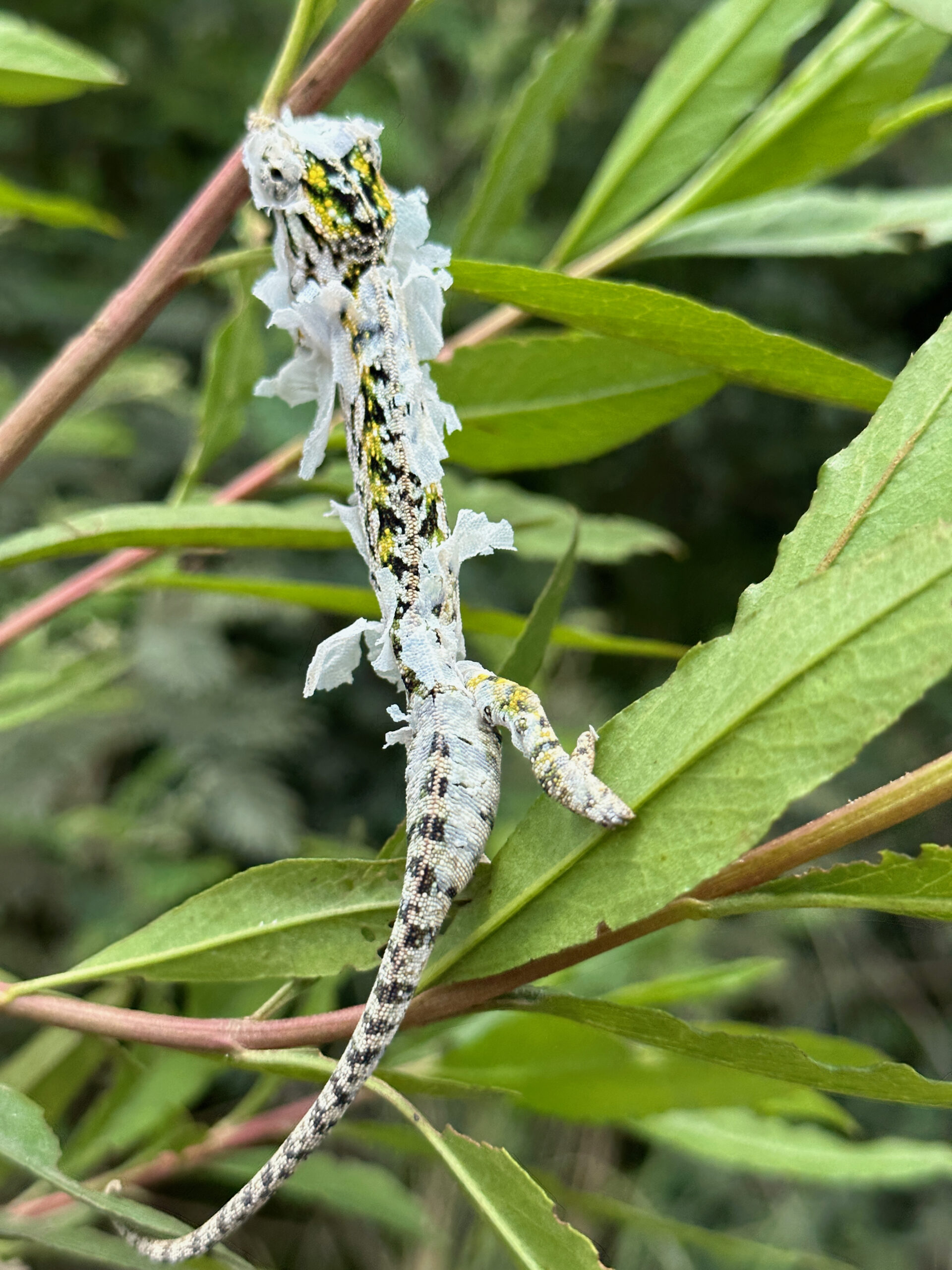
This wild carpet chameleon in Madagascar showed how chameleons have no problem shedding during the rainy season and 90% humidity days.

