
Top 3 Best Plants for Chameleon Enclosures (Easy & Effective)
Setting up a chameleon cage is about creating a living environment where your chameleon can truly thrive. Every branch, leaf, and layer matters. The good news? Some of the most common, easy-to-find plants at nurseries and home improvement centers are perfect for chameleons. Today I am going to introduce you to the top three chameleon plants!
Why Plants Matter in a Chameleon Enclosure
Plants have specific uses in the chameleon environment. Most importantly, they provide your chameleon with a sense of security. But they also provide drinking surfaces and climbing paths. Before diving into specific plants, let’s understand the three critical functions plants serve in a chameleon habitats.

Provide Your Chameleon a Sense of Security with Dense Foliage
Chameleons naturally live and hide in trees. Their primary defense against predators is not being seen. In a chameleon’s mind, being hidden equals security. This security leads to less stress and a stronger immune system. Remember, a chameleon’s health depends on the strength of their immune system, which depends on both physical nutrition and emotional security. Look for plants with enough leaf cover to help your chameleon feel hidden. This can be tricky because it is sometimes not easy to find plants that are big enough. And, do you really have time to let them grow until they are big enough? This is the type of thing we chameleon keepers have to navigate!

Leaves Offer Chameleons Natural Drinking Surfaces
In nature, mist, rain, and fog collect on leaves, and chameleons drink from these water droplets. Chameleons live in trees and are vulnerable on the ground, so puddles of water aren’t readily available. But water droplets on leaves? That’s a common occurrence they’ve evolved to use. Broad leaves are ideal for collecting water droplets. Even if you are using fogging for hydration, dew will collect on the leaves. This allows the chameleon to wake up to a world covered in dew in case they need to top off their hydration before going about their day.
Note: Just remember some plant leaves are hydrophobic and water droplets just roll off of them! I love using the China Doll (Radermachera sinica) but I have to remember – those leaves won’t hold water droplets!

Plants - or Branches - Are Your Chameleon’s Highways
In the wild, chameleons climb, perch, sleep, and live on plants. In captivity, our smaller cage sizes mean plants rarely grow large enough to support a chameleon’s weight. This is where we compensate by adding a branch structure, so the plants only need to provide the leaves. It’s a perfect partnership! This means not every plant needs to provide all three functions. We can use teamwork to create a complete environment! In fact, I design every cage with a solid branch structure so the plants can just be leafy, catch water drops, and look good!
Top 3 Best Plants for Chameleon Enclosures (Easy & Effective)
What are the best plants for chameleons? After decades of keeping and breeding chameleons, three plants stand out for their reliability, functionality, and availability: Pothos (Epipremnum aureum), Umbrella Plant (Schefflera arboricola), and Weeping Fig (Ficus benjamina).
These three options consistently perform well in chameleon enclosures by providing security, drinking surfaces, and visual appeal—making them ideal for both beginner and advanced keepers.

#1 Chameleon Plant - Pothos (Devil's Ivy / Epipremnum aureum)
Why It’s #1: Pothos is the consummate chameleon plant, used extensively for decades. Those large, heart-shaped leaves create an excellent veil for hiding. It’s extremely easy to grow and thrives indoors with indirect light – perfect for chameleon cages. Multiple varieties are available, from deep green to variegated white and green, to neon green colors.
The Hidden Monster: What many people don’t realize is that pothos can grow up to 60 feet in the wild. Leaves can reach a foot across when mature. If you root it in soil substrate at the bottom of your cage, expect explosive growth that will transform your enclosure…maybe in ways you weren’t prepared for!
Toxicity Note: While pothos is listed as toxic for dogs and cats (causing throat irritation), Veiled Chameleons have nibbled on pothos for decades with no issues. I am not recommending it as food, but its safety is proven through generations of use.
Strategy for Use: Mount pothos high in the cage using Dragon Ledges or similar brackets. Allow it to trail down, creating a wall of leaves. Place branches behind the leaf curtain for perching spots. If using bioactive substrate, let it root at the bottom for spectacular growth. Golden Pothos is recommended for the biggest leaves.

Umbrella Plant (Schefflera arboricola)
Why It Works: The Umbrella Plant provides structure and woody elegance to your build. Its upright stems become quite solid over time, and those glossy leaves radiate out like small pinwheel umbrellas, creating visual variety and depth. It’s particularly popular for baby chameleons who can perch comfortably within a single leaf cluster.
Growth Potential: This plant can easily grow into a 20-foot wall of leaves if given the chance. Be prepared to prune regularly to keep it manageable in your enclosure.
Toxicity Note: Similar to pothos, Schefflera arboricola appears on toxic lists for mammals. However, Veiled Chameleons have been eating it without problems for years. Once again, we’ve used it for decades and seen no issues.
Strategy for Use: Place the pot directly in the cage center if you have a solid floor, or mount smaller plants against walls. You can also plant directly in bioactive substrate for best growth. The stems can actually support adult male panther chameleons once mature. Use it for vertical structure and you can add horizontal branches for a complete perching solution.

Weeping Fig (Ficus benjamina)
Why It’s Classic: The Weeping Fig has been used with chameleons from the very beginning. While it has small leaves, it provides dense coverage. Little sprigs work perfectly for baby cages, and a large pot can fill a 4-foot tall cage beautifully.
Special Characteristics: WARNING: This plant may drop all its leaves if light conditions change. Don’t panic when this happens – new leaves will grow back! In ideal conditions, it can grow 20-30 feet tall and will actively try to grow through screen tops if not pruned.
Safety Consideration: The white sap that appears when branches or leaves break can be irritating. Keep this sap away from your chameleon’s eyes and ensure they don’t have access to freshly broken branches until the sap dries.
Strategy for Use: Ficus makes an excellent centerpiece plant. It works well either in pots or planted directly in substrate. Just prepare for regular pruning sessions to keep it under control.
Other Great Plants to Try For Your Chameleon
The plant world offers incredible diversity for chameleon keepers. Other excellent options include:
- Spider plants
- Lipstick plants
- Pachira aquatica (Money Tree)
- Creeping figs
- Prayer plants
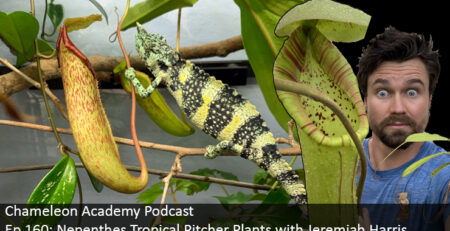
- Nepenthes (Tropical pitcher plants)
- Alocasia varieties
- Philodendron species
Each offers different sizes, shapes, colors, and patterns to make your cage both functional and beautiful. There’s a whole new world of wonder and learning waiting in the plant kingdom. Oh, and just a note. Nepenthes are carnivorous plants. Don’t put them in with a chameleon that can fit in the pitchers!

Spider Plant
Spider plants are common, hardy, and provide great cover for chameleons!

Waxy Plant
Waxy Plants (Hoya spp) grow slowly, but provide a valuable service of being resistant to dessication under bright lights.

Polka-dot Plant
Polka-dot Plants (Hypoestes) are an example of a plant you can use to brighten up your chameleon enclosure. They have no other purpose, but bringing pleasing color to the enclosure is purpose enough!

Tropical Pitcher Plant
Yes, you can use carnivorous plants in your chameleon enclosure! Tropical Pitcher Plants (Nepenthes) are perfect candidates! Although, make sure your chameleon will not fit in the pitchers. Adult panther chameleons are fine…hatchlings are not a good candidate to keep with pitcher plants. Use good judgement!
The Philosophy of Planted Enclosures For Chameleons
Your chameleon’s home is their complete environment and sanctuary. Creating a layered, enriching environment goes beyond creating a nice showpiece. It’s better for their physical health and important for their mental well-being.
Working with plants becomes a jumping-off point for exploring the plant world. Many chameleon keepers find themselves becoming plant enthusiasts. As I like to say, “It’s really hard to be a chameleon person and not eventually become a plant person.” But there is also a very human reason for creating a beautiful chameleon cage. The more we are interested in the environment we are creating the more attention we will give to it. And the more attention we give to it, the better the care our chameleon gets.
Final Thoughts
Whether you stick to the classic three plants or branch out to explore the vast plant world, remember that every element contributes to your chameleon’s quality of life. Start with functionality – security, hydration, and climbing – then add beauty and personal expression.
The most successful chameleon keepers are naturally curious, and you have a rich world waiting to be discovered in plants. Different shapes, colors, and textures can all combine to create a gorgeously lush indoor jungle where your chameleon can feel safe – and that becomes a source of beauty and peace for you.
Plant boldly, trim often, and give your chameleon an environment worth exploring!
Further Resources on Chameleons and Plants
If you would like to learn more about chameleons and plants, here are some resources that can provide additional insight!
Watch this episode on the Chameleon Academy Video Channel!
Checkout the Main Chameleon Plant WebPage

Get Chameleon Information in Your Inbox With the Chameleon Academy Newsletter!
Thank you for being part of this chameleon academy outreach. As always, every week has a topic which is presented in the weekly chameleon academy email newsletter. You can join the conversation by subscribing to the newsletter yourself. The newsletter is a serious outreach for me. I know you are used to getting newsletters that are haphazardly thrown together to check a to-do box. But I put a great deal of effort into figuring out what is best for the community, where I want to take my herpetoculture, and writing substantial educational newsletters. So, try it out and see if it gives you the chameleon fix you are looking for!
You can sign up for the newsletter here: Chameleon Academy Weekly Newsletter
Join the Live Weekly Saturday Chameleon Workshop!
The Chameleon Academy community gathers once a week on Saturday for the Saturday Chameleon Workshop. This is a live event where I present the week’s topic and answer any questions about any part of the chameleon experience! But, more than a lecture, you get to meet new friends that share your love for chameleons. That live chat is hopping and embodies the spirit of the Chameleon Academy community! You can check it out with the replays or, better yet, join us live on Saturdays at 12PM Noon Pacific time. These live events are held on the Chameleon Academy Live YouTube channel. Note that there are two Chameleon Academy channels – one for videos and one for live sessions! You can subscribe and find past episodes of the live session channel here: