Veiled Chameleon Cage Size and Type: What You Actually Need to Know
If you are setting up a home for a Veiled Chameleon, the cage is the single most important decision you will make. Unfortunately, most people come home from a pet store or reptile expo with a cage that is already too small. This guide will tell you exactly what size cage a Veiled Chameleon needs, what type of cage works best, and what to do if you were sent home with the wrong setup.
What Size Cage Does a Veiled Chameleon Need?
The standard recommended cage size for a Veiled Chameleon is 2′ x 2′ x 4′ (width x depth x height).
This size applies to males, females, and even juveniles.
Why start with a full adult-size cage for a baby? Because Veiled Chameleons grow extremely quickly and eat aggressively. By the time you have set up and broken down a grow-out cage, your chameleon has already outgrown it. Skipping the intermediate cage saves you time and money.
That said, 2′ x 2′ x 4′ is something of a practical minimum — it became the standard largely because it is the largest size that is easy for manufacturers to produce and sell. If you have the space, a 4′ x 2′ x 4′ enclosure is definitely better, especially for adult males, which are pretty large when full grown.
Quick reference:
Recommended Cage size for Veiled Chameleons:
Juvenile = 2′ x 2′ x 4′
Adult Female = 2′ x 2′ x 4′ (4′ x 2′ x 4′ ideal)
Adult Male = 2′ x 2′ x 4′ (4′ x 2′ x 4′ ideal)
What Type of Cage Is Best for a Veiled Chameleon?
There are three main cage types used for Veiled Chameleons:
Screen Cages for a Veiled Chameleon
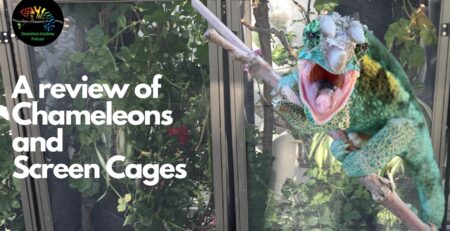
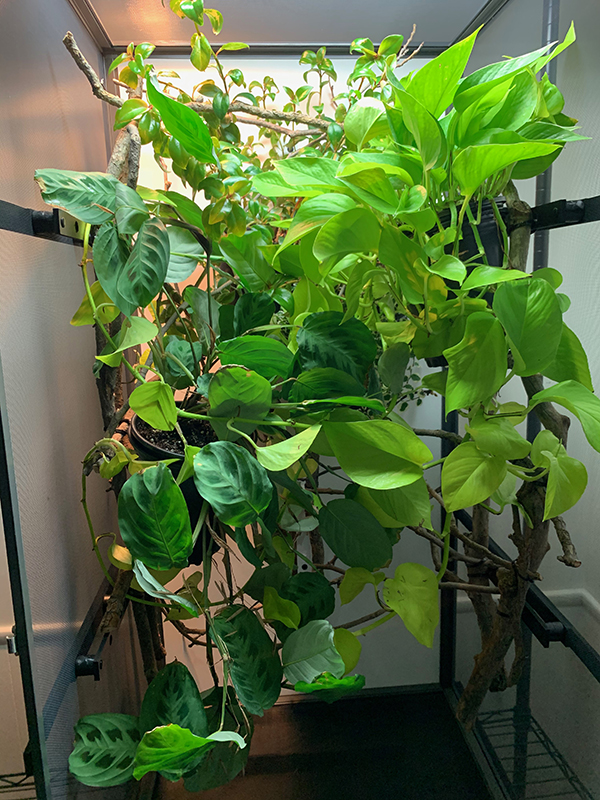
For many years, screen cages were considered the only acceptable option for chameleons. There is a real historical reason for this — early chameleon keeping had serious problems with respiratory infections tied to stagnant, humid air, and fully screened cages maximized ventilation. Screen cages still work well, but they make it harder to maintain humidity and require more frequent misting. If you have a screen cage it is definitely useable and there are ways to close off cage sides if you need more humidity retention.
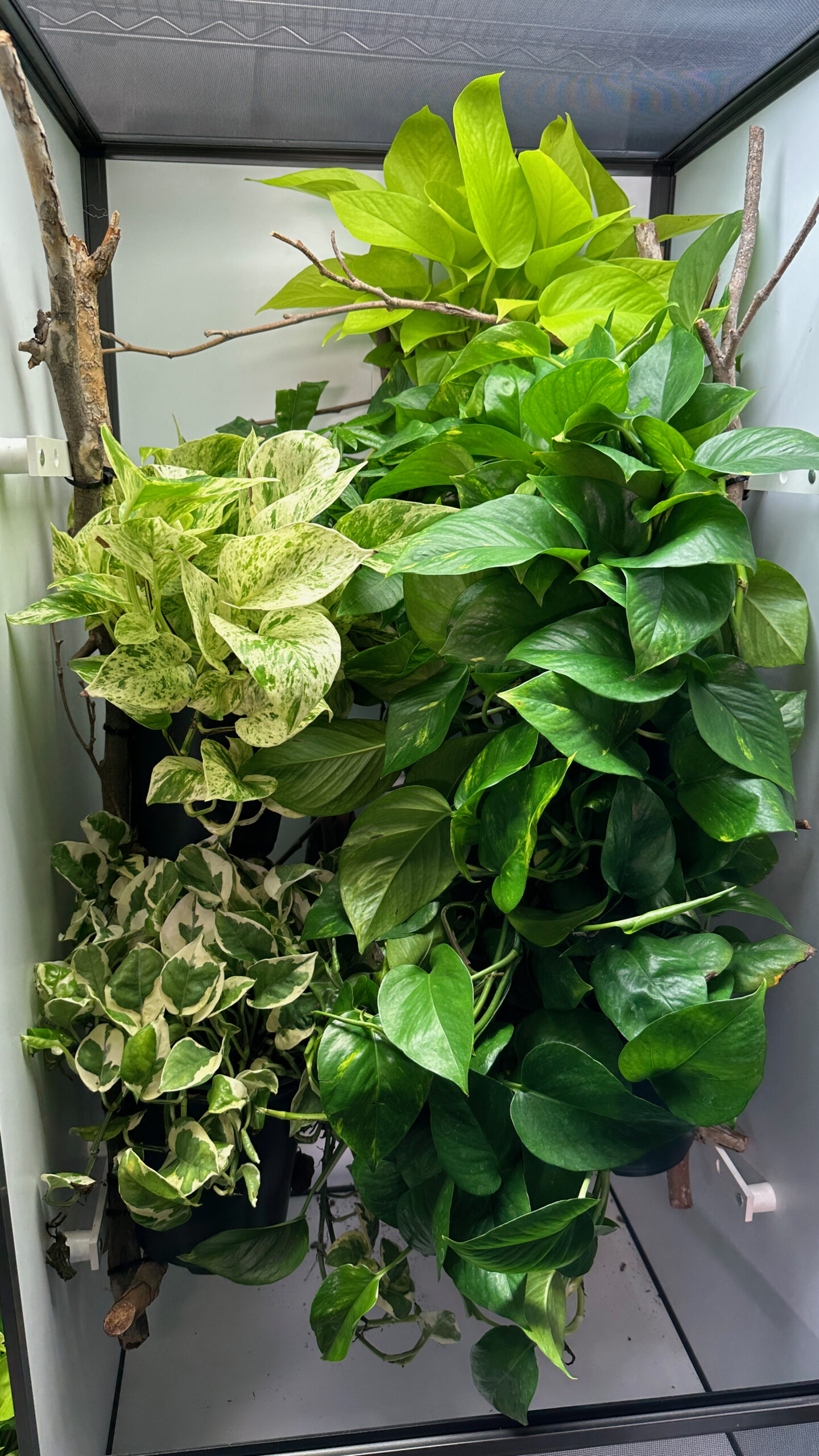
Hybrid Cages (Mostly Solid Sides) for a Veiled Chameleon
Today’s hybrid cages — solid on most sides with screened ventilation panels — are generally a better option for Veiled Chameleons. They hold humidity more effectively while still providing the airflow that prevents stagnant conditions. Husbandry in a hybrid cage is slightly different from a screen cage, but the humidity management is considerably easier.
Glass Terrariums for a Veiled Chameleon
Glass terrariums can work if they have adequate ventilation, but few are manufactured in the sizes needed for adult Veiled Chameleons. If you are using a glass enclosure, confirm that it has proper top or cross ventilation before committing to it.
Important Chameleon Cage Note on Husbandry:
Screen cage, hybrid cage, and glass terrarium husbandry are not identical. Misting frequency, drainage, and temperature gradients all behave differently depending on cage type. Make sure the care information you are following matches your specific cage.
Outdoor Keeping for Veiled Chameleons
Veiled Chameleons tolerate a wide range of temperatures, which makes them well-suited for outdoor keeping in many climates. Even a few months outdoors per year — with access to natural sunlight and fresh air — provides significant benefits. If outdoor time is an option for you, it is worth pursuing.
What If You Were Sent Home with the Wrong Chameleon Cage?
The Zoo Med Reptibreeze Chameleon Kit and similar starter packages are commonly sold alongside Veiled Chameleons at pet stores and expos. These kits include cages that are too small for a Veiled Chameleon.
**If this is your situation, start planning your upgrade now.** Do not wait until your chameleon looks crowded. Veiled Chameleons grow so quickly that the time to begin assembling an adult setup is immediately — regardless of how small your animal is today.
You were sold that kit in good faith, and you were right to trust that a cage marketed for chameleons should be appropriate for chameleons. Unfortunately, retail inventory decisions are often driven by what is easiest to stock and sell, not what is best for the animal. The good news is that you are now in a position to get it right.
Here is a page specifically on how to make the Zoo Med Chameleon Kit work for you and how to do a transition to a more appropriate cage.
Key Takeaways for Veiled Chameleon Caging
– Minimum cage size: 2′ x 2′ x 4′ for all life stages
– Preferred cage size: 4′ x 2′ x 4′, especially for adult males
– Best cage type for most keepers: Hybrid (solid sides with ventilation)
– Screen cages work but require more active humidity management
– If your cage is too small: Start your upgrade now — Veiled Chameleons grow fast
– Outdoor keeping is a great option if you can provide it seasonally
Frequently Asked Questions
Can I use a smaller cage for a baby Veiled Chameleon?
You can, but it is rarely worth it. Babies grow so rapidly that a 2′ x 2′ x 4′ cage is appropriate from the start. You will save money and effort by skipping the grow-out cage entirely. If the baby is big enough to go to a new home it is big enough to go into an adult size cage.
s a 24" x 24" x 48" screen cage good for a Veiled Chameleon?
It meets the minimum size requirement and is widely used. A hybrid cage of the same footprint will be easier to manage humidity in, but a screen cage can work with appropriate misting and drainage.
Are glass tanks okay for Veiled Chameleons?
Only if they have adequate ventilation. Stagnant air is a health risk. Most glass tanks available commercially are also too small for an adult Veiled Chameleon. Glass itself is no a problem. A glass terrarium of adequate size and containing chimney effect ventilation is a great cage, but it does have specialized husbandry.
How fast do Veiled Chameleons grow?
Very fast. A hatchling can reach adult size within six to eight months under good conditions. Plan your enclosure around the adult, not the animal in front of you.
Author: Bill Strand
Bill Strand has kept Veiled Chameleons for decades and has bred them to multiple generations. He is the host of the Chameleon Academy Podcast and founder of Chameleon Academy, a resource dedicated to evidence-based chameleon husbandry.
Next in this Series...
Setting up the inside of your Veiled Chameleon cage — plants, branches, and how to build a functional habitat.